EN
EN

In the world of maritime collectibles, decorative replicas, and corporate gifting, the distinction between an ordinary workshop and a truly professional model ship manufacturer is far more significant than most buyers initially realize. The craftsmanship, material selection, quality control protocols, and client communication standards all play a decisive role in determining whether a finished replica meets expectations or falls disappointingly short. When procurement managers, maritime companies, interior designers, and collectors evaluate their options, understanding what separates a truly professional model ship manufacturer from a generic producer becomes essential to making the right investment
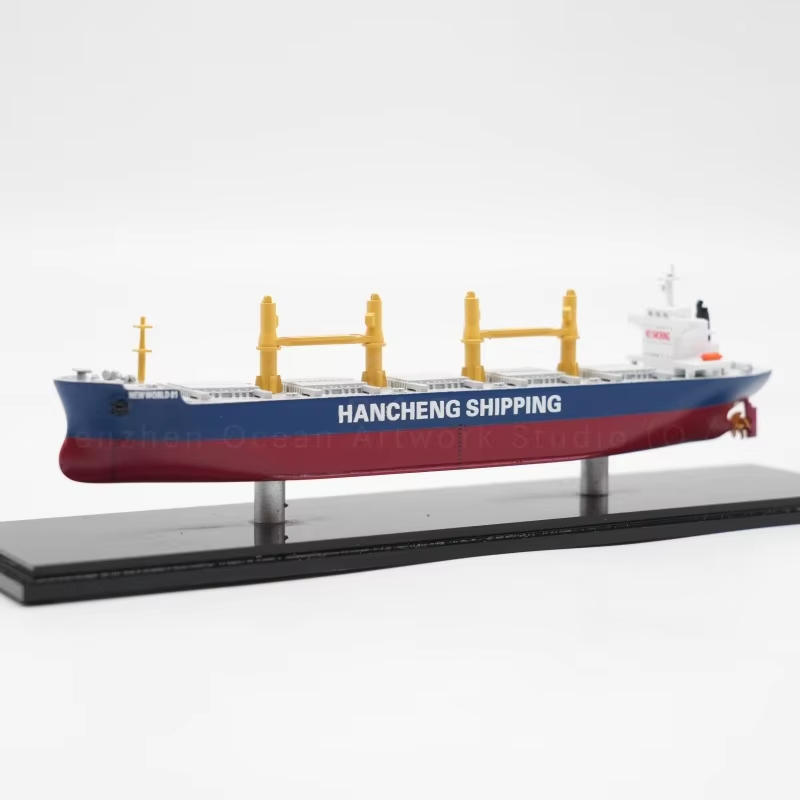
The global demand for high-fidelity ship models has grown considerably across maritime industry displays, corporate offices, shipping company lobbies, and private collections. This rising demand has also brought an influx of producers offering varying levels of quality, making it increasingly challenging to identify a model ship manufacturer that consistently delivers professional-grade results. This article examines the core distinguishing factors that define a standout professional model ship manufacturer, helping buyers, specifiers, and procurement decision-makers evaluate their choices with clarity and confidence.
One of the most fundamental marks of a professional model ship manufacturer is the ability to produce replicas with exceptional scale accuracy. Scale fidelity means that every dimension of the vessel — from hull curvature and deck fittings to crane positions and container bay layouts — faithfully reflects the proportions of the actual vessel. This requires access to authentic technical drawings, rigorous measurement protocols, and skilled craftspeople who understand both naval architecture and fine model construction.
A serious model ship manufacturer invests in digital modeling tools such as CAD software to develop precise component templates before any physical fabrication begins. This digital-first approach reduces dimensional errors and ensures repeatability across production runs. Whether the order involves a single bespoke container ship model or a batch of standardized corporate gift replicas, scale precision must never be compromised.
The technical fidelity extends beyond dimensions to surface detailing. Deck planking textures, bridge windows, anchor chains, mooring bollards, and even the vessel's registration markings must be executed with accuracy. Buyers evaluating a model ship manufacturer should examine sample products closely for the quality of these fine details, as they reveal the true level of skill and professional commitment behind the workshop.
Professionalism in model ship manufacturing also depends heavily on the materials chosen for construction. High-quality manufacturers typically use marine-grade resins, ABS plastics, fiberglass composites, or solid hardwoods depending on the ship type and intended display purpose. The choice of material directly impacts the model's durability, appearance, and long-term resistance to humidity, UV exposure, and physical handling.
A credible model ship manufacturer sources its materials consistently, maintaining tight specifications that ensure every batch of hulls, superstructure components, and deck fittings performs to the same standard. Inconsistent material sourcing is one of the earliest warning signs that a manufacturer operates at a subprofessional level. When a replica is destined for a corporate lobby, maritime museum, or executive boardroom, structural integrity and long-term visual appeal are non-negotiable.
Metal components such as railings, cranes, and propeller shafts should be manufactured from corrosion-resistant alloys or treated metals rather than inexpensive substitutes that degrade quickly. The attention to material quality at every assembly stage is what separates a professional model ship manufacturer from a commodity producer focused solely on price competition.
A defining characteristic of a professional model ship manufacturer is its genuine ability to deliver customized solutions that precisely match client briefs. Customization in this context goes well beyond selecting a paint color. It encompasses hull form accuracy for a specific named vessel, livery reproduction that matches the shipping line's current branding, accurate placement of company logos, and even the configuration of cargo loads such as container stacks on a container ship model.
True customization requires a collaborative workflow. The model ship manufacturer must be capable of receiving client-provided drawings, photographs, vessel specifications, and brand guidelines, then translating these inputs into a technically accurate and visually faithful replica. This demands skilled project management, clear communication channels, and the technical capacity to interpret complex naval documentation.
Many clients ordering from a professional model ship manufacturer are procurement officers working for major shipping companies who expect the final product to represent their fleet authentically. Any deviation from the actual vessel's appearance — wrong funnel color, incorrect crane configuration, inaccurate bow design — reflects poorly not only on the manufacturer but on the client's corporate presentation. The ability to get customization right, first time, is a true mark of professional standing.
Professional model ship manufacturers typically integrate a formal prototype review and client approval stage into their production workflow. Before full-scale manufacturing begins, a sample or prototype is produced and presented to the client — often supported by high-resolution photography or video walkarounds — to confirm that all dimensions, colors, markings, and details align with expectations.
This approval process is a quality gate that prevents costly errors from being reproduced across an entire batch. It also demonstrates that the manufacturer values the client's investment and takes accountability seriously. Manufacturers who skip this step or treat it as optional tend to generate higher rates of returns, revisions, and client dissatisfaction.
The willingness of a model ship manufacturer to invest time and resources in prototype approval before production is a reliable indicator of professional maturity and a client-centered operational philosophy. It reflects a business model built on long-term relationships rather than transactional volume.
The painted finish of a ship model is arguably the most immediately visible indicator of manufacturing quality. A professional model ship manufacturer treats surface preparation as a critical phase rather than a minor pre-paint formality. Proper surface preparation involves sanding composite or resin components to a consistent smoothness, filling any casting imperfections, and applying multiple primer coats to ensure the topcoat adheres evenly and resists chipping over time.
Paint application in a professional environment is typically conducted using airbrush systems and controlled spray booths to achieve smooth, even coverage without brush marks, drips, or texture inconsistencies. Colors are matched to client specifications using standardized color references, and multiple thin coats are applied to build depth and durability rather than a single heavy coat that obscures fine surface details.
A model ship manufacturer operating at a professional level will also apply protective topcoat finishes — either matte, satin, or gloss — depending on the aesthetic requirements of the replica. These clear coats serve both aesthetic and protective functions, sealing the paintwork against fingerprint oils, dust adhesion, and minor abrasion during handling.
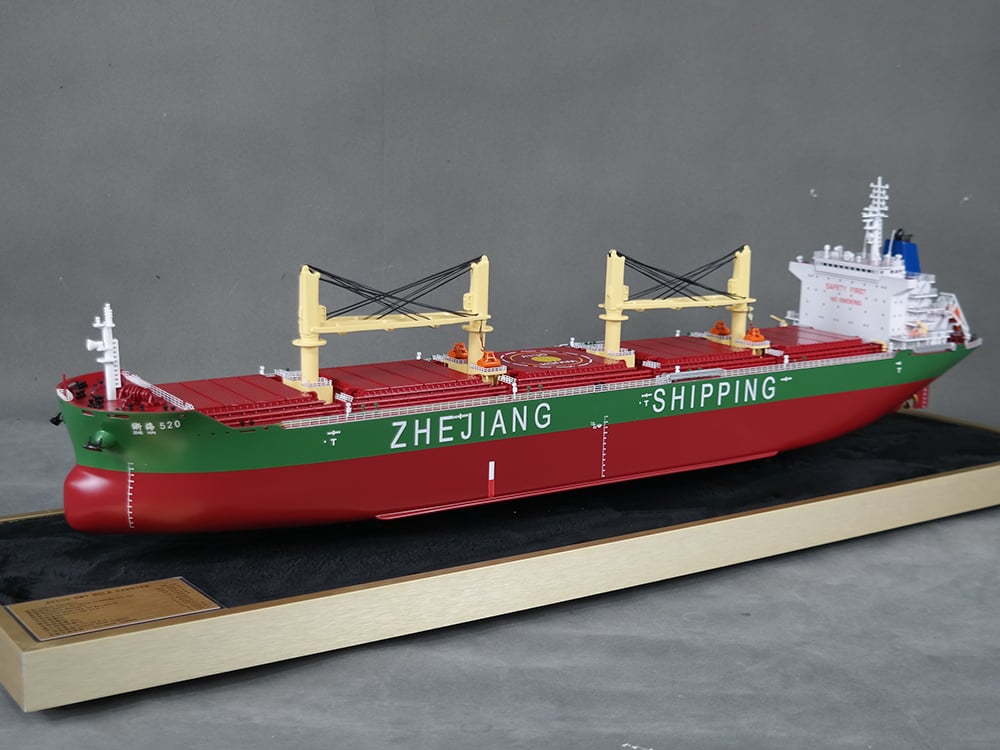
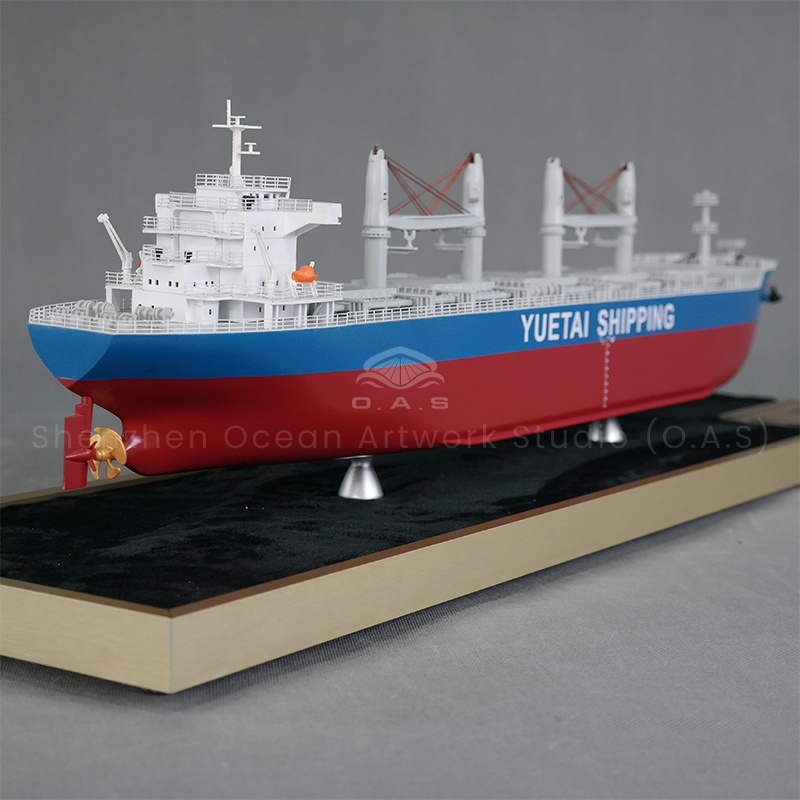
Shipping company liveries are often highly detailed and brand-sensitive, featuring specific hull markings, funnel colors, stack badges, and container configurations that must be reproduced faithfully. A professional model ship manufacturer employs custom-printed decals or masking techniques to achieve crisp, accurately positioned livery elements rather than relying on hand-painted approximations that introduce variability.
Decal quality matters enormously. Low-resolution or poorly scaled decals immediately undermine the perceived quality of an otherwise well-constructed model. Professional manufacturers invest in high-resolution decal printing with waterslide or dry-transfer application methods that conform smoothly to curved surfaces without bubbling, silvering, or misalignment.
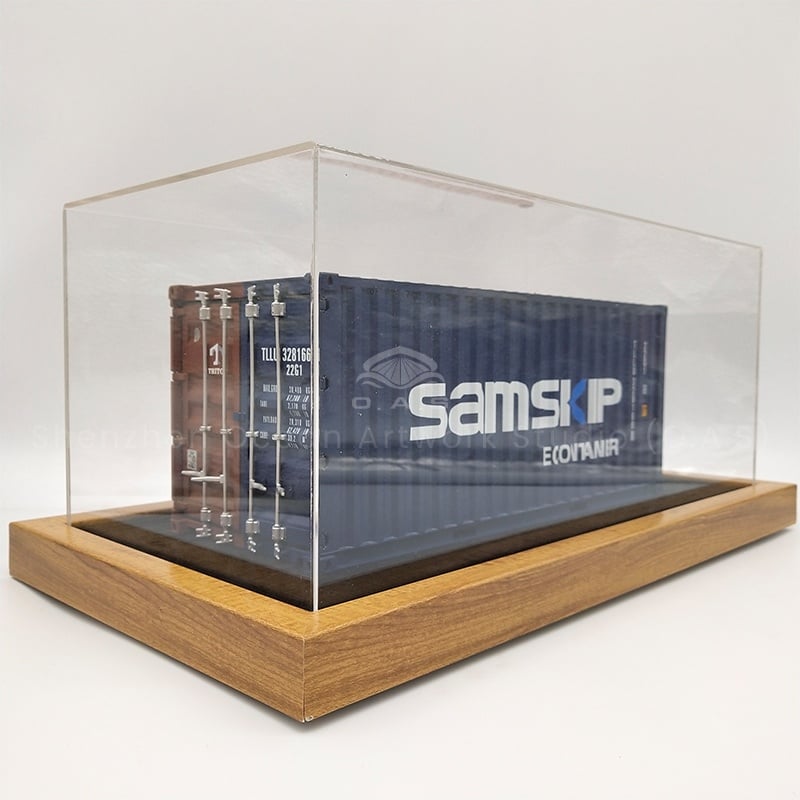
For buyers commissioning replicas of container ships with complex liveries, the ability of a model ship manufacturer to reproduce even the smallest registration numerals and company logos at scale is a clear differentiator. This level of graphic detail signals that the manufacturer has both the equipment and the skill to deliver a product that stands up to close scrutiny.
A professional model ship manufacturer integrates quality control checkpoints throughout the production process rather than conducting a single final inspection before shipment. These inspection stages typically include component quality verification upon receipt of raw materials, dimensional checks at the hull and superstructure assembly stage, paint and finish review, decal alignment inspection, and a final assembled model review against the original client specification.
The use of structured inspection checklists and documented quality records demonstrates organizational maturity. It also creates accountability across the production team, ensuring that each craftsperson understands that their work will be formally evaluated before it moves to the next stage. This systematic approach to quality dramatically reduces the incidence of defects reaching the client.
When evaluating a model ship manufacturer, asking directly about their quality control process and requesting documentation of their inspection procedures is a valid and informative due diligence step. A manufacturer confident in their professionalism will readily provide this information, while one operating without structured QC may become evasive or vague.
The delivery phase is often where quality that has been carefully built over weeks of craftsmanship is needlessly lost through inadequate packaging. A professional model ship manufacturer designs custom packaging solutions that physically support the model's most fragile elements — delicate railings, mast assemblies, crane booms, and exposed propeller shafts — during transit.
Professional packaging typically involves custom-cut foam inserts, inner protective wrapping, and robust outer cartons rated for the model's weight and fragility level. For international shipments, additional considerations such as humidity-resistant packaging and vibration-dampening foam layers become important factors. The packaging investment reflects the manufacturer's commitment to delivering the product in the same condition it left the workshop.
The presentation value of the packaging itself also matters for corporate gifting applications. A model ship manufacturer serving B2B clients often provides branded display boxes or premium presentation cases that enhance the perceived value of the model and support the client's gifting objectives. This attention to the complete product experience — from manufacturing through to final delivery — is a hallmark of true professional standing.
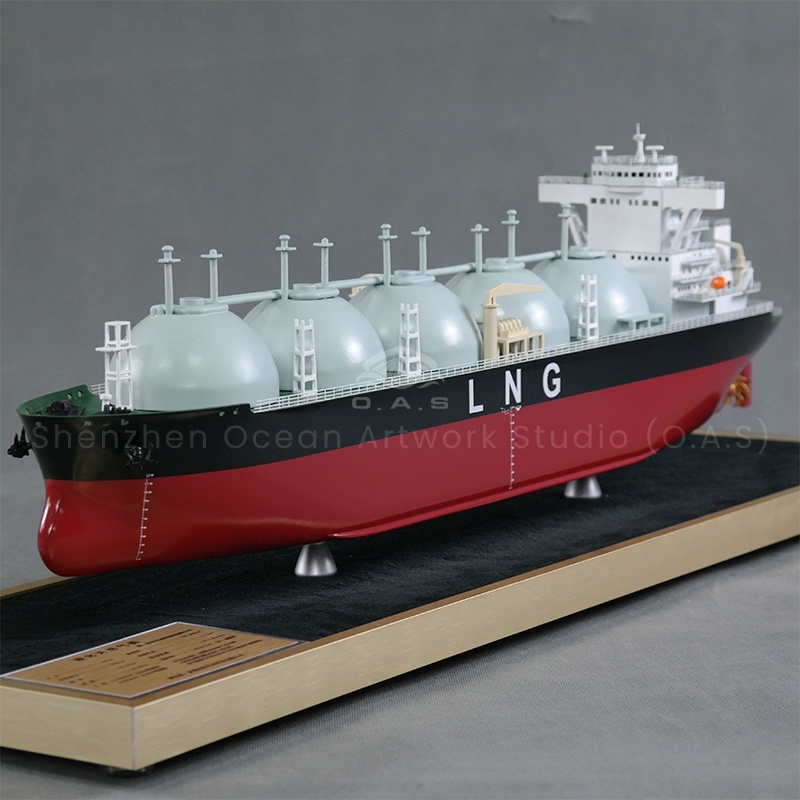
The depth of a model ship manufacturer's portfolio is one of the most reliable indicators of professional capability. A manufacturer with an extensive portfolio demonstrates experience across multiple vessel categories — container ships, bulk carriers, tankers, LNG carriers, naval vessels, passenger ferries, and offshore platforms — along with a proven ability to meet the diverse requirements of shipping companies, maritime institutions, and private collectors.
Portfolio depth also signals process maturity. Producing a wide variety of ship types requires the manufacturer to maintain comprehensive technical reference libraries, adaptable tooling systems, and versatile finishing capabilities. This breadth of experience translates into a more reliable production partner for clients whose requirements may evolve over time from simple display pieces to complex bespoke replicas.
When reviewing a model ship manufacturer's portfolio, buyers should assess not only the variety of vessel types represented but also the consistency of finish quality across different models. A portfolio that shows equally high standards across simple and complex vessels is a strong indicator of organizational capability rather than selective effort on showcase pieces.
Professional model ship manufacturers distinguish themselves through responsive, transparent, and structured communication throughout the project lifecycle. From the initial inquiry and quotation stage through technical specification reviews, prototype approvals, production updates, and final delivery coordination, the manufacturer's communication style reflects their commitment to the client relationship.
Clients commissioning custom ship models often have significant lead time pressures — the model may be required for a vessel naming ceremony, an industry trade show, or a major corporate anniversary event. A manufacturer that provides clear production timelines, proactively communicates any delays, and maintains accurate delivery commitments is far more valuable than one offering a low price but unreliable scheduling.
A model ship manufacturer operating at a professional level also assigns dedicated project contacts or account managers to client orders, ensuring continuity of communication and avoiding the confusion that arises when multiple staff handle the same project without coordination. This structured approach to client management is a visible sign of organizational professionalism that buyers can assess before committing to an order.
When selecting a model ship manufacturer for corporate gifting, prioritize their customization capability, livery accuracy, prototype approval process, and packaging quality. Ask to see portfolio samples that demonstrate finished quality on container ships or vessel types similar to your fleet. Confirm that they can match your company's exact color specifications and reproduce brand markings accurately at scale. A manufacturer that offers a structured approval workflow before full production is a strong indicator of professional reliability.
Production timelines for custom ship models vary based on complexity, scale, and batch size, but a professional model ship manufacturer will typically require between four and twelve weeks from confirmed specification to delivery. This window includes technical drawing review, component fabrication, painting, finishing, quality inspection, and packaging. Manufacturers with established production workflows can often provide more accurate lead time estimates upfront, which is itself a mark of organizational professionalism.
Yes, scale size directly influences the achievable detail level. Larger scale models allow a model ship manufacturer to reproduce finer structural elements — such as deck fittings, ladder rungs, cable reels, and crane mechanisms — with greater fidelity and visual clarity. Smaller scale models require more skilled hand-finishing techniques to suggest these details convincingly at reduced size. When specifying a custom order, discuss scale requirements with your manufacturer early to align expectations regarding the level of detail that is technically feasible at your chosen scale.
Request physical samples or detailed photography of completed models from previous projects comparable in type and scale to your requirements. Ask the model ship manufacturer to describe their quality control process, including the inspection stages they apply during production. If ordering a significant batch or high-value bespoke piece, consider requesting a paid prototype or sample unit before committing to full production. Reviewing client references from shipping companies or maritime organizations that have previously ordered from the manufacturer is also a reliable validation approach.
 Hot News
2024-06-11
2024-06-07
2024-06-01
2024-06-01
2024-06-01
2024-05-25
Shenzhen Ocean Artwork Studio (O.A.S) Technology Co., Ltd. is a leading ship model manufacturer with over 15 years of experience. We specialize in designing and producing civil, military, and engineering ship models, working with top global shipping brands such as MAERSK, COSCO, and EVERGREEN.