EN
EN

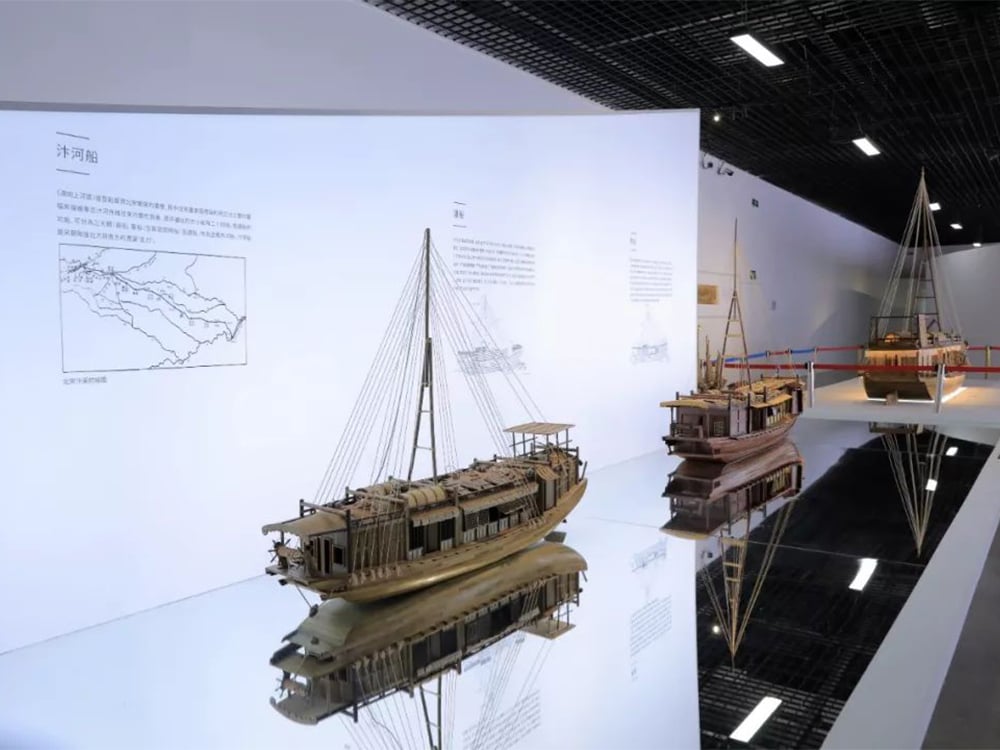
In the world of corporate gifting, brand representation, and executive décor, the model ship has emerged as one of the most prestigious and meaningful tokens a company can commission. Unlike generic promotional items, a custom model ship carries weight — both literally and symbolically. It speaks to maritime heritage, logistical ambition, and the kind of craftsmanship that corporate clients associate with quality partnerships. For shipping companies, freight forwarders, port authorities, and even financial institutions with ties to global trade, a bespoke model ship communicates exactly the right message to partners, clients, and stakeholders.
Understanding how model ship factories actually deliver custom solutions helps corporate buyers make smarter procurement decisions. The process is far more sophisticated than many clients expect, involving deep collaboration, material science, precision manufacturing, and branding expertise. This article walks through how professional model ship manufacturers approach corporate customization — from initial brief to final delivery — and why this level of tailored production consistently delivers exceptional value for B2B clients across industries.
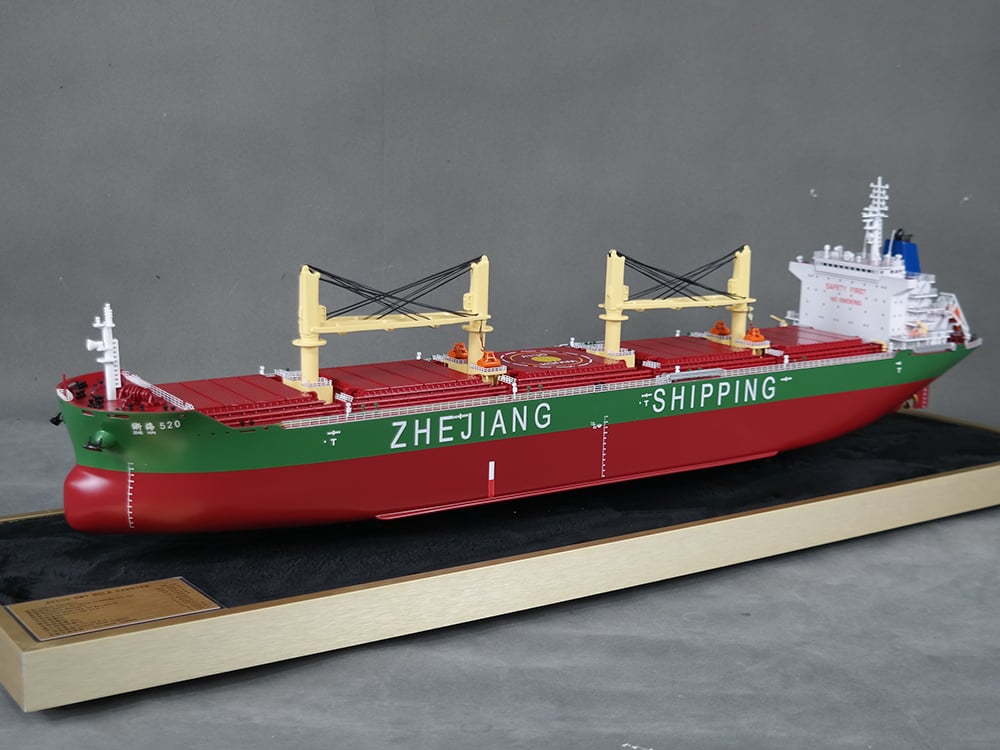
Corporate clients commission a custom model ship for a variety of strategic reasons. Many shipping companies and logistics firms order detailed replicas of their own vessels as showpieces for boardrooms, trade show booths, or presentation rooms. These displays reinforce brand identity and signal industry expertise to every visitor who enters the space. A model ship bearing a company's livery and logo becomes a three-dimensional business card that no printed brochure can replicate.
Beyond internal display, many organizations use model ships as high-value corporate gifts for milestones such as fleet expansions, new route launches, or anniversaries. A custom model ship presented to a key partner or executive carries emotional resonance that standard promotional gifts simply cannot match. It signals genuine investment in the relationship and reflects positively on the gifting company's culture of quality.
There is also a growing demand from non-shipping industries. Banks that finance maritime projects, logistics technology firms, and port authorities all commission model ships to celebrate business achievements or cement partnerships. The model ship, in this context, is a universal symbol of global commerce and operational scale.
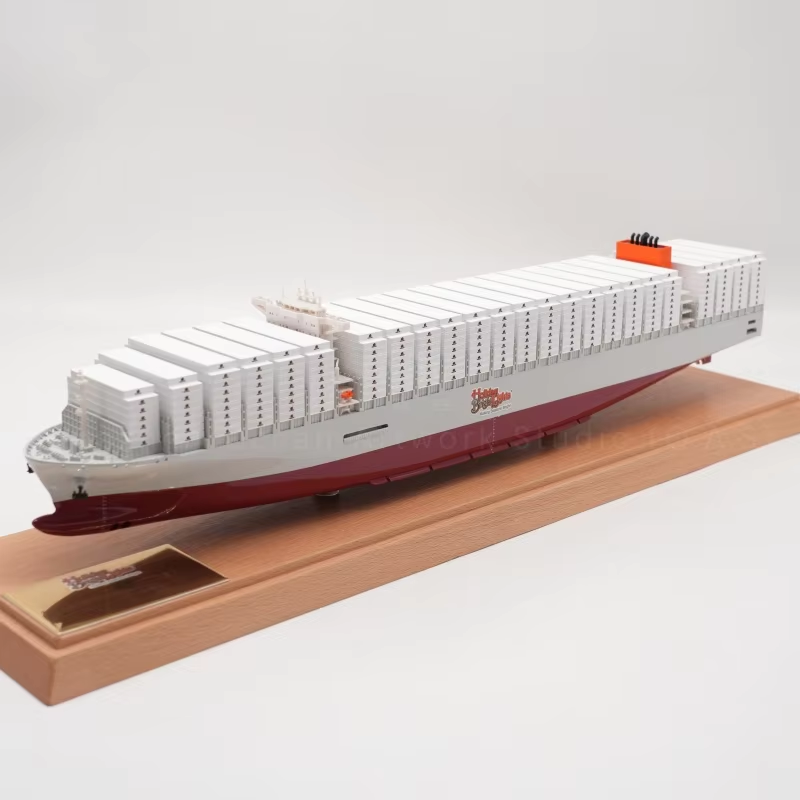
Corporate clients approach model ship factories with expectations that go far beyond choosing a color. They expect full livery replication, accurate hull geometry, custom logos applied with precision, and packaging solutions that reflect their brand. Some clients require that the model ship match a specific vessel in their fleet down to the positioning of cranes, deck equipment, and navigation instruments.
Others need the model ship to carry custom plaques, engraved nameplates, or companion certificates suitable for framing. Premium corporate buyers often request bespoke display cases in acrylic or wood, sometimes with embedded lighting systems. The entire package must convey the same premium feel as the model ship itself. This demand for comprehensive customization is exactly what distinguishes a professional model ship factory from a generic manufacturer.
The customization process at a professional model ship factory begins with a structured briefing phase. The corporate client submits reference materials — which may include technical drawings, deck plans, high-resolution photographs of the actual vessel, and branding guidelines. The more detailed the reference package, the more accurate the finished model ship will be. Experienced factories have dedicated account managers who guide clients through this process, especially when clients are unfamiliar with the technical vocabulary used in shipbuilding.
At this stage, the factory's design team analyzes the reference materials and raises clarification questions. They identify which features must be reproduced with strict accuracy and which elements allow for slight simplification. For example, complex underwater hull geometry may be simplified on a static display model ship while the visible above-waterline details are rendered in full precision. This negotiation of accuracy versus practicality is a normal and healthy part of the briefing process.
Clients are also asked to specify the intended scale of the model ship. Common corporate scales range from 1:150 to 1:1000, depending on the vessel size and the space where the model ship will be displayed. A container vessel rendered at 1:200 may produce a model ship that is over a meter long — ideal for a boardroom feature wall but impractical for a desktop display. The factory advises clients on optimal scale selection based on their stated use case.
Once the brief is finalized, the factory produces a prototype or a set of digital renders for client review. Some factories use 3D modeling software to visualize the model ship before any physical production begins, allowing the client to see color placements, logo positions, and structural proportions in a realistic preview. This stage dramatically reduces the risk of costly revisions later in the production cycle.
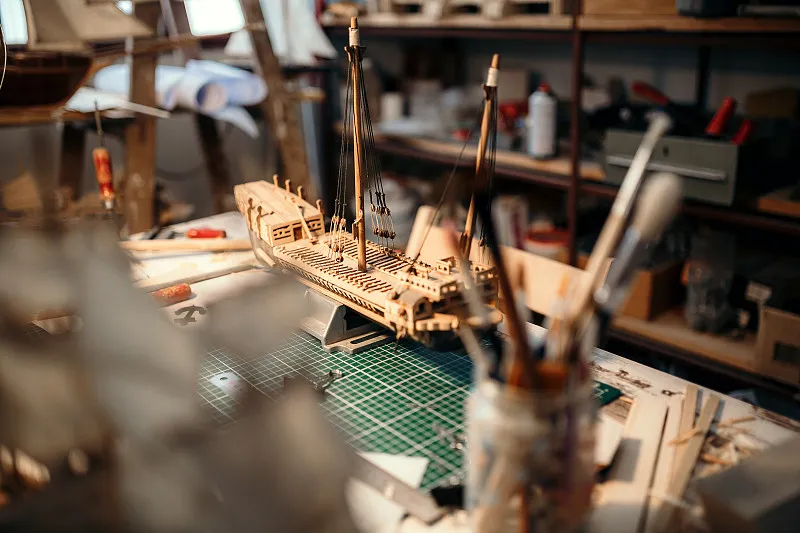
Physical prototypes may be created using CNC milling or resin casting, depending on the factory's capabilities and the complexity of the design. The prototype model ship is then submitted to the client for review, often with a detailed checklist that covers specific features such as funnel markings, stern lettering, flag positioning, and hull color gradients. Corporate clients typically go through one to three rounds of revision before approving the prototype for mass production.
This approval process is critical for bulk corporate orders where dozens or hundreds of identical model ships are needed. Errors discovered after full production runs are expensive and time-consuming to correct. Professional model ship factories therefore treat the prototype stage as a non-negotiable investment in quality assurance.
The choice of material for a custom model ship significantly affects its visual quality, durability, and price point. High-end corporate model ships are most commonly made from ABS plastic, resin composite, or wood — each with distinct advantages. ABS plastic allows for high-detail surface reproduction and consistent paint adhesion, making it a reliable choice for large production runs where uniformity is essential.
Resin composites offer superior detail reproduction and a weighty, premium feel that many corporate clients prefer for gift-quality model ships. The material captures fine textures such as hull plating lines, porthole rings, and deck grating with exceptional clarity. Resin models tend to command higher price points but are widely regarded as the benchmark for quality in the corporate model ship category.
Wooden model ships, while less commonly used for branded corporate orders, remain highly valued for their artisanal aesthetic. Some clients specifically request wood for a model ship intended to evoke maritime tradition rather than modern operational precision. Wood models require skilled hand-finishing and are typically produced in smaller quantities due to the labor intensity involved.
Applying a corporate client's branding to a model ship requires specialized painting and transfer techniques. Large livery areas — such as hull colors and funnel designs — are typically airbrushed by skilled technicians working from color-matched paint formulas referenced against the client's official brand guidelines. Achieving the correct red, blue, or green is not a casual decision; it requires Pantone matching or careful spectrophotometric calibration.
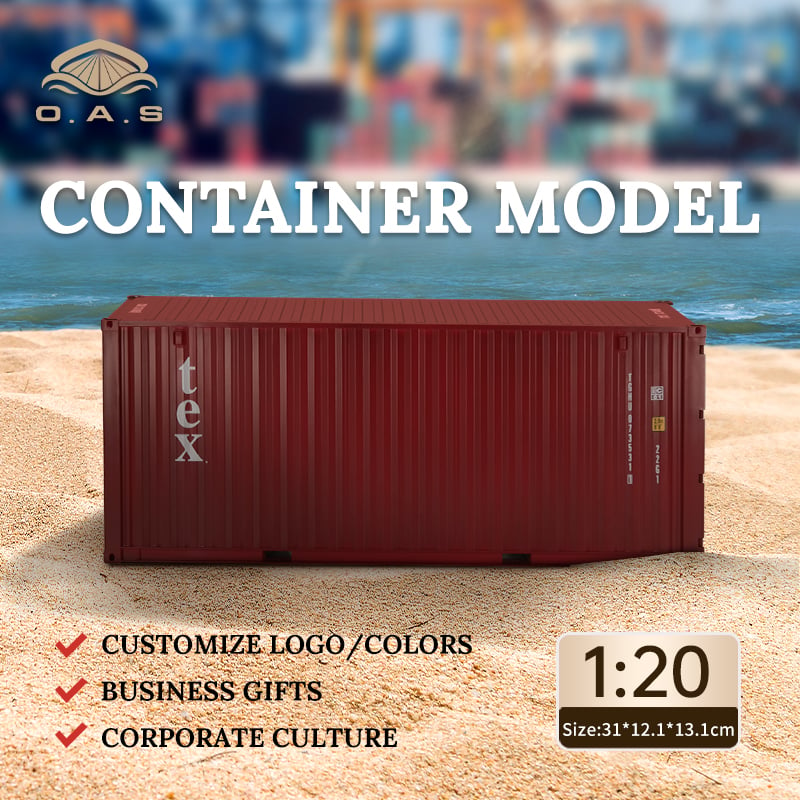
Logo application on a model ship may use water-slide decals, UV printing, or hand-painted lettering depending on the size, complexity, and resolution of the logo. Decals are the most common solution for complex multi-color logos on smaller surfaces. UV printing on pre-formed components allows extremely fine text and graphic reproduction, which is particularly important for stern name lettering and container markings on a container ship model.
Final finishing includes clear-coating the completed model ship to protect the paint layer from handling, UV exposure, and humidity. Display model ships intended for permanent boardroom installation may receive additional protective treatment to extend color retention. The finishing stage is where professional model ship factories distinguish themselves from lower-quality producers — a well-finished model ship retains its visual impact for decades.
For corporate clients, the unboxing experience of a model ship is almost as important as the model ship itself. Professional factories offer custom packaging solutions ranging from simple foam-lined cardboard boxes to full wooden display crates with velvet interiors, branded outer sleeves, and companion documentation. When a model ship is intended as a gift, the packaging contributes directly to the recipient's first impression and sets the emotional tone for the entire presentation.
Wooden display boxes with acrylic lids are particularly popular for executive-level model ship gifts. The box protects the model during shipping while simultaneously serving as a long-term display case. Many clients request that the box itself carry branding elements such as embossed logos, silk-screened text, or custom-colored finishes. This integrated approach ensures that the model ship arrives as a complete, cohesive branded experience rather than a component in need of further assembly.
Corporate model ship orders frequently involve quantities ranging from 50 to several hundred units, destined for delivery across multiple countries. Model ship factories experienced in handling corporate accounts have established logistics partnerships and understand the specific export documentation, fragile cargo handling requirements, and insurance protocols that large international orders demand.
Each model ship in a bulk order must be individually secured within its packaging to prevent movement during air or sea freight. Inner foam inserts are often custom-cut to match the exact geometry of the model ship, ensuring zero contact between the model surface and any hard packaging surface. Factories producing model ships for corporate accounts typically conduct drop and vibration tests on packaged samples before committing to a final packaging design for a large order.
Lead times for corporate model ship orders vary based on complexity and quantity. Simple livery changes on existing hull designs may be completed in four to six weeks. Fully custom model ships built from new reference materials may require twelve to twenty weeks from approved brief to delivered product. Clients are advised to factor these timelines into their project planning, particularly for time-sensitive events such as annual general meetings, trade shows, or milestone celebrations.
Many corporate clients who commission a model ship once return to the same factory repeatedly. This is not coincidental. The data created during the first production run — technical files, color formulas, decal masters, and tooling — can be retained by the factory for future reorders. This accumulated knowledge shortens lead times, reduces sampling costs, and improves consistency across successive orders. A trusted model ship factory becomes a genuine long-term supply partner rather than a one-off vendor.
Building this kind of relationship also enables the corporate client to iterate intelligently over time. A company that commissions a model ship for its first container vessel can return years later to commission models for new additions to the fleet, with the factory already familiar with the livery standards and production preferences. This continuity is invaluable for companies that routinely use model ships in their corporate communications and gifting strategies.
Corporate clients often ask whether the investment in a premium custom model ship delivers measurable return. The answer lies in the context of use. A model ship displayed prominently in a shipping company's reception area is seen by every client, investor, and partner who visits. It communicates capability, scale, and industry commitment without a word being spoken. The ROI on that kind of passive brand communication is difficult to calculate precisely but is consistently reported as high by companies that practice it.
For gift applications, a custom model ship stands apart from perishable or forgettable corporate gifts because it is retained, displayed, and remembered. Research in corporate gifting consistently shows that three-dimensional, personalized items generate stronger emotional recall than standard merchandise. A well-crafted model ship given to a key partner becomes a conversation piece that keeps the gifting company present in that partner's environment for years.
The strategic value of investing in quality model ship production ultimately flows from the alignment between the gift's perceived quality and the company's own brand positioning. For companies that operate in premium market segments — whether in shipping, finance, or logistics — a model ship that looks and feels expensive sends exactly the right signal about how that company approaches all of its work.
Corporate clients should provide the ship’s general arrangement plan, line drawings, hull markings, high-resolution photos from multiple angles, official brand guidelines, the desired scale of the model, the intended quantity, and any specific features that must be accurately reproduced. The more complete the reference materials, the faster and more accurately the factory can deliver a model that meets the requirements.
Production timelines depend heavily on the complexity of the customization and the order quantity. A model ship based on an existing hull design with new livery may be completed within four to six weeks. A fully bespoke model ship built from new reference materials, including prototype development and client approval rounds, typically requires twelve to twenty weeks. Clients should plan accordingly and communicate event deadlines clearly to the factory from the outset.
Yes, many professional model ship factories offer small-batch production for corporate clients who need limited quantities — sometimes as few as ten to twenty units. However, minimum order quantities vary by factory and by the complexity of the design. Highly customized model ships with unique tooling requirements may have higher minimums due to tooling costs. It is worth discussing quantity flexibility early in the briefing process to understand the cost implications at different order volumes.
Corporate buyers should look for factories that offer a structured approval process including prototype review, demonstrate experience with brand-accurate livery reproduction, provide references or a portfolio of previous corporate model ship commissions, and have documented packaging and logistics capabilities for international delivery. Factories that invest in digital 3D visualization tools before physical production begins are typically more capable of managing complex corporate briefs. Quality certifications and after-sales support policies are also meaningful indicators of a reliable model ship production partner.
 Hot News
2024-06-11
2024-06-07
2024-06-01
2024-06-01
2024-06-01
2024-05-25
Shenzhen Ocean Artwork Studio (O.A.S) Technology Co., Ltd. is a leading ship model manufacturer with over 15 years of experience. We specialize in designing and producing civil, military, and engineering ship models, working with top global shipping brands such as MAERSK, COSCO, and EVERGREEN.