Premium Scale Container Ship Models - Educational Maritime Training Tools & Collector's Items

Get a Free Quote

Our representative will contact you soon.
Email
Name
Company Name
WhatsApp
Message
0/1000

scale container ship models

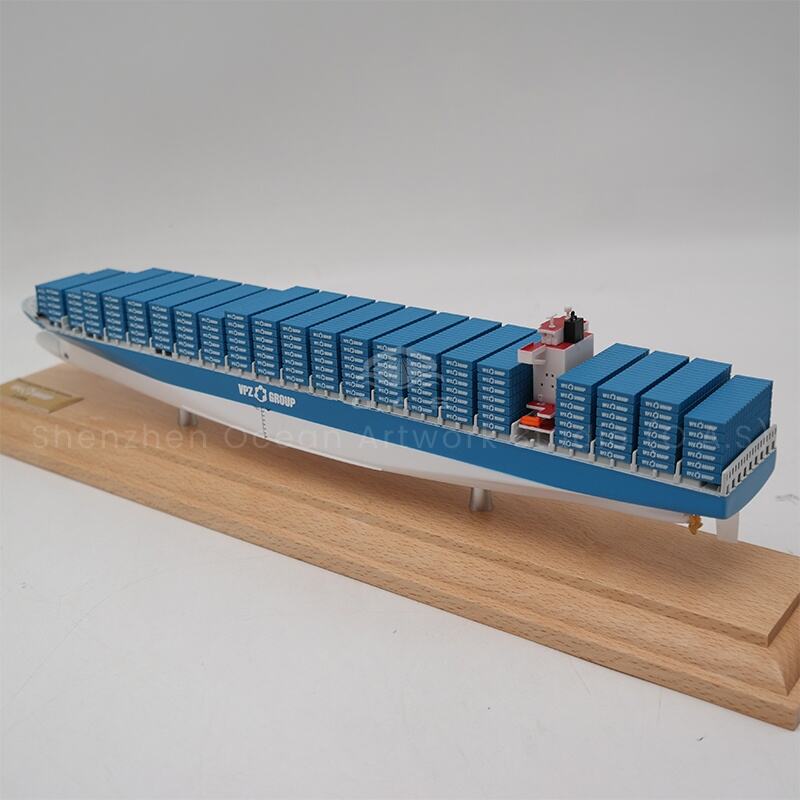
Scale container ship models represent sophisticated miniature replicas that capture the essence and engineering marvel of modern maritime cargo vessels. These meticulously crafted models serve multiple purposes, from educational tools to collector's items, while maintaining accurate proportions and realistic details that mirror their full-sized counterparts. The main functions of scale container ship models encompass educational demonstration, maritime training simulation, display purposes, and hobbyist collection activities. These models effectively showcase the complex structure and operational mechanics of container shipping vessels, making them invaluable resources for maritime academies, shipping companies, and educational institutions worldwide. The technological features incorporated into modern scale container ship models include precision-engineered hulls with authentic curvature, detailed superstructure elements, functional loading cranes, removable container units, and accurate scaling of deck equipment. Advanced models often feature motorized propulsion systems, working navigation lights, and remote control capabilities that enhance their educational and entertainment value. Many scale container ship models incorporate realistic paint schemes matching actual shipping lines, complete with company logos and authentic color patterns. The materials used in construction typically include high-grade plastics, die-cast metals, and composite materials that ensure durability while maintaining fine detail reproduction. Applications for these models extend across various sectors including maritime education programs, corporate presentations for shipping companies, museum exhibitions, trade show displays, and private collections. Professional training centers utilize these models to demonstrate cargo loading procedures, vessel stability principles, and port operations without the complexity and cost associated with full-scale training. The precision engineering behind scale container ship models ensures that every component, from the bridge structure to the propeller design, accurately represents the proportional relationships found in actual vessels, making them effective tools for understanding maritime engineering principles and container shipping operations.

New Products

Scale container ship models offer numerous practical benefits that make them valuable investments for educational institutions, businesses, and enthusiasts alike. The primary advantage lies in their ability to provide hands-on learning experiences without the substantial costs associated with full-scale maritime training. Students and professionals can examine vessel components up close, understanding the intricate relationships between different ship systems while developing practical knowledge of container shipping operations. These models eliminate geographical barriers by bringing maritime education directly to landlocked areas where access to actual vessels remains limited. Cost-effectiveness represents another significant benefit, as purchasing scale container ship models requires minimal investment compared to organizing field trips to active ports or chartering actual vessels for educational purposes. The models provide consistent availability for training sessions, allowing instructors to schedule lessons without depending on weather conditions or port accessibility. Durability ensures long-term educational value, as quality models withstand repeated handling and demonstration use while maintaining their structural integrity and visual appeal. The portable nature of scale container ship models enables flexible learning environments, whether in classrooms, conference rooms, or outdoor educational settings. These models facilitate better comprehension of complex maritime concepts by allowing learners to visualize three-dimensional relationships between ship components and cargo arrangements. Safety advantages become apparent when considering that model-based learning eliminates risks associated with actual vessel tours or training exercises in active port environments. Professional development benefits extend to shipping industry employees who can use these models for client presentations, demonstrating vessel capabilities and cargo handling procedures in office environments. The visual impact of scale container ship models enhances communication effectiveness during business meetings and educational sessions, as stakeholders can better understand operational concepts through tactile and visual engagement. Maintenance requirements remain minimal compared to other educational equipment, requiring only occasional cleaning and careful storage to preserve their condition. Investment protection occurs through the lasting educational value these models provide, serving multiple user groups across extended periods while maintaining their relevance as shipping technology evolves.

Latest News

Ship model, is inherited, but also carry forward

18

Jul

Ship model, is inherited, but also carry forward

Discover how ship models preserve centuries of maritime culture and boatbuilding heritage. Learn about their historical significance and modern craftsmanship. Explore the legacy today.
View More
Changing Truck Models: Older Trends To Modern Trends

29

Jul

Changing Truck Models: Older Trends To Modern Trends

Explore how truck models have evolved from simple classics to intricate modern replicas. Discover the impact of technology, design, and collector demand on this transformation. Learn more now.
View More
How Are Ship Models Made? A Step-By-Step Guide

18

Jul

How Are Ship Models Made? A Step-By-Step Guide

Discover the intricate process of crafting ship models, from design to final detailing. Learn how expert craftsmanship brings maritime history to life. Explore now.
View More

Get a Free Quote

Our representative will contact you soon.
Email
Name
Company Name
WhatsApp
Message
0/1000

scale container ship models

Precision Engineering and Authentic Detail Reproduction

Precision Engineering and Authentic Detail Reproduction

The precision engineering behind scale container ship models sets them apart as exceptional educational and display pieces that accurately represent the sophisticated design of modern cargo vessels. Every aspect of these models undergoes meticulous attention to detail, from the hull's hydrodynamic curves to the precise placement of deck equipment and superstructure elements. Manufacturing processes employ advanced techniques including computer-aided design and precision molding to ensure dimensional accuracy that maintains proper scale relationships throughout the entire model. The authentic detail reproduction extends to functional elements such as movable cranes, removable containers, and articulated loading equipment that demonstrate actual operational capabilities found on real container ships. Paint applications utilize authentic color schemes and weathering techniques that replicate the appearance of working vessels, including realistic rust effects, wear patterns, and company-specific liveries that enhance visual authenticity. Interior details often include bridge equipment, navigation instruments, and crew accommodation areas that provide comprehensive understanding of vessel operations and living conditions. The engineering precision ensures that proportional relationships between different ship components remain accurate, allowing users to understand how various systems integrate within the overall vessel design. Quality control measures during manufacturing verify dimensional accuracy and detail fidelity, ensuring each model meets professional standards suitable for educational and commercial applications. Advanced models incorporate functional lighting systems, working propellers, and operational steering mechanisms that demonstrate actual ship systems in miniature form. The attention to structural details includes accurate representation of hull plating, weld lines, and construction joints that showcase shipbuilding techniques and maritime engineering principles. Material selection focuses on durability while maintaining fine detail capability, using specialized plastics and metals that resist wear while preserving intricate surface textures and component shapes. This precision engineering approach ensures that scale container ship models serve as reliable reference tools for understanding maritime technology and vessel design principles across extended periods of use.
Educational Versatility and Training Applications

Educational Versatility and Training Applications

Scale container ship models demonstrate remarkable educational versatility that makes them indispensable tools across multiple learning environments and professional training applications. Maritime academies utilize these models to illustrate fundamental concepts including vessel stability, cargo distribution, and port operations without requiring expensive facility investments or complex scheduling arrangements. The hands-on learning approach enabled by these models allows students to physically manipulate components, arrange cargo configurations, and observe the effects of different loading patterns on vessel stability and performance. Professional training programs benefit from the ability to demonstrate emergency procedures, safety protocols, and operational workflows using scale container ship models as visual aids that enhance comprehension and retention rates. Corporate training applications extend to shipping companies that use these models for employee orientation, client presentations, and operational planning sessions where clear communication of complex procedures becomes essential. The versatility of scale container ship models supports diverse educational objectives, from basic maritime awareness programs for general audiences to advanced engineering courses that require detailed technical understanding. Interactive demonstrations become possible through manipulable components that allow instructors to show cause-and-effect relationships in real-time, enhancing student engagement and learning outcomes. Cross-cultural training benefits emerge when international maritime programs use standardized models to overcome language barriers and provide universal visual references for operational procedures. Research applications utilize these models for studying cargo optimization strategies, loading sequence planning, and efficiency improvements without disrupting actual shipping operations. Museum and exhibition use showcases maritime heritage and modern shipping technology to public audiences, promoting understanding of global trade infrastructure and economic importance. The educational versatility extends to distance learning programs where portable models enable remote instruction and demonstration activities that maintain engagement levels comparable to traditional classroom settings. Specialized training scenarios become feasible through customizable model configurations that represent different vessel types, cargo arrangements, and operational conditions encountered in professional maritime environments.
Cost-Effective Maritime Education Solutions

Cost-Effective Maritime Education Solutions

Scale container ship models provide exceptionally cost-effective maritime education solutions that deliver comprehensive learning experiences while maintaining budget-friendly accessibility for educational institutions and training organizations. The initial investment in quality models generates long-term educational value through repeated use across multiple courses, training sessions, and demonstration events without additional operational costs or maintenance requirements. Compared to organizing field trips to active ports or arranging vessel tours, scale container ship models eliminate transportation expenses, scheduling constraints, and safety concerns while providing consistent educational opportunities regardless of external factors. The cost-effectiveness becomes particularly evident when calculating per-student educational costs over extended periods, as models serve hundreds of learners without degradation in educational quality or availability. Budget-conscious institutions benefit from the ability to establish comprehensive maritime education programs without substantial infrastructure investments or ongoing operational expenses associated with larger training facilities. The economic advantages extend to training organizations that can offer professional development courses using these models without requiring expensive venue rentals or specialized equipment arrangements. International educational programs realize significant cost savings by utilizing standardized models rather than coordinating complex logistics for overseas training experiences or facility access. Small-scale educational initiatives gain access to high-quality maritime education resources that would otherwise remain financially prohibitive, democratizing access to specialized knowledge and training opportunities. The durability of well-constructed scale container ship models ensures that initial investments continue providing educational value across multiple years, creating favorable return-on-investment calculations for budget-conscious decision makers. Maintenance costs remain minimal, requiring only basic cleaning and proper storage to maintain functionality and appearance, further enhancing the cost-effectiveness proposition. Flexibility in educational applications maximizes investment value as the same models serve diverse learning objectives, from basic awareness programs to advanced technical training, accommodating various educational levels and requirements. Group learning scenarios become economically viable through shared access to models during collaborative exercises and team-based learning activities that enhance peer interaction and knowledge transfer while maintaining cost-effective resource utilization.
Get a Quote Get a Quote

Get a Free Quote

Our representative will contact you soon.
Email
Name
Company Name
WhatsApp
Message
0/1000