EN
EN

Every model ship begins as a promise — a commitment to reproduce the form, character, and detail of a real vessel at a reduced scale. For manufacturers, fulfilling that promise demands far more than artistic talent. It requires engineering discipline, precise measurement systems, authentic materials, and a deep understanding of how real ships are built. Whether the subject is a bulk carrier, a container vessel, or a historic warship, every model ship must reflect the proportions and structural logic of its full-scale counterpart. The difference between a decorative replica and a truly accurate model ship lies entirely in the processes behind it.
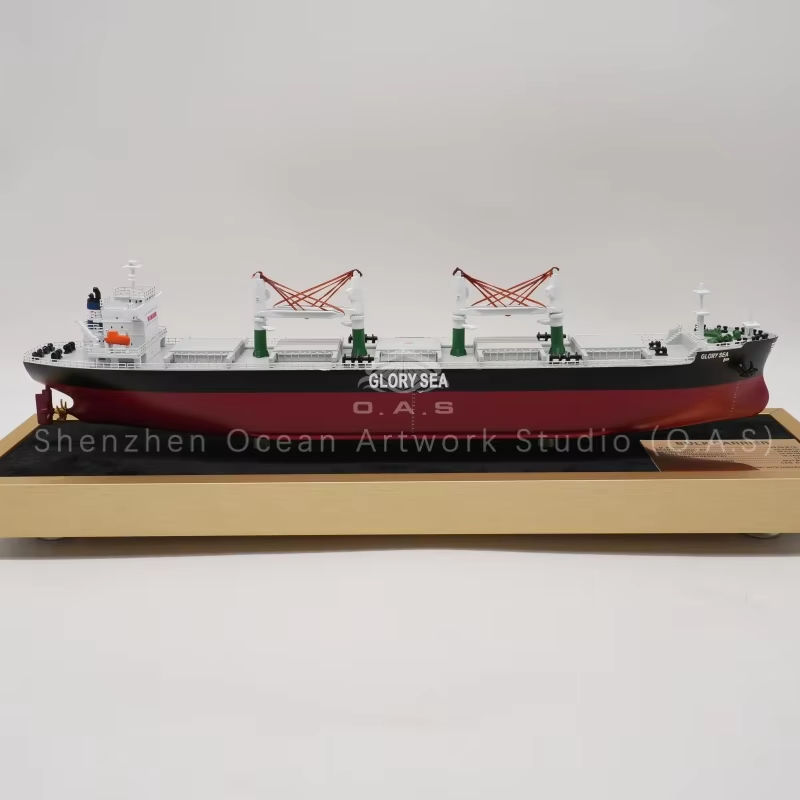
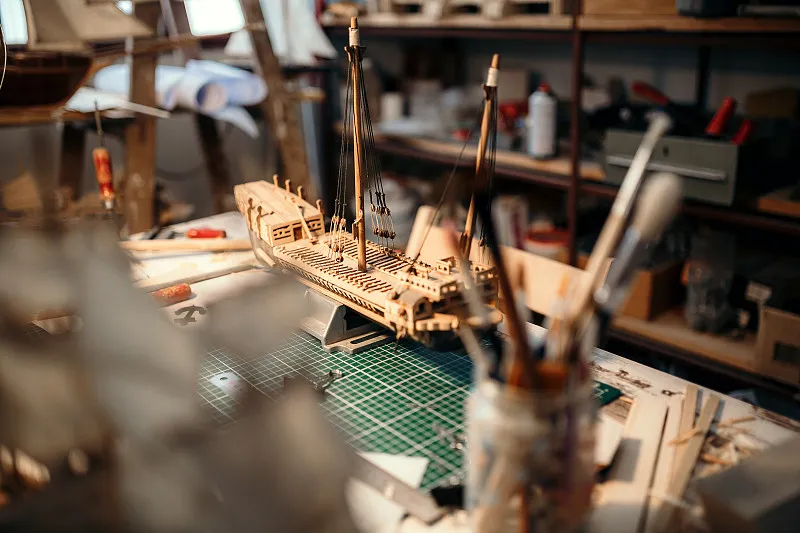
The production of a high-quality model ship is a disciplined, multi-stage process that blends technical drafting, skilled craftsmanship, and rigorous quality inspection. Manufacturers serving B2B clients — including shipping companies, maritime academies, and corporate display buyers — face especially high standards. A model ship ordered as a boardroom display or a training reference must be visually convincing and dimensionally correct. Understanding how manufacturers achieve this level of accuracy helps buyers make informed decisions and gives the industry a framework for evaluating quality.
The foundation of every accurate model ship is its source data. Reputable manufacturers begin each project by obtaining verified technical drawings, shipyard blueprints, or official vessel specifications. These documents provide hull lines, superstructure dimensions, deck layouts, and structural proportions that a model ship must replicate. Without this data, even skilled craftspeople cannot guarantee dimensional fidelity. For container ships and bulk carriers, manufacturers often work directly with shipping lines or shipyards to obtain proprietary drawing sets, ensuring the model ship captures vessel-specific details rather than generic approximations.
Defining the correct scale ratio is one of the most critical decisions in model ship production. Common ratios range from 1:100 to 1:1000 depending on the vessel size and display purpose. Once a scale is established, every element of the model ship — from the keel length to funnel height to cargo crane proportions — must be derived from the same ratio without deviation. Manufacturers use digital modeling software and precision CNC machining to maintain dimensional control across all components. Even minor scaling errors accumulate across a complex model ship structure, making systematic verification at each production stage essential.
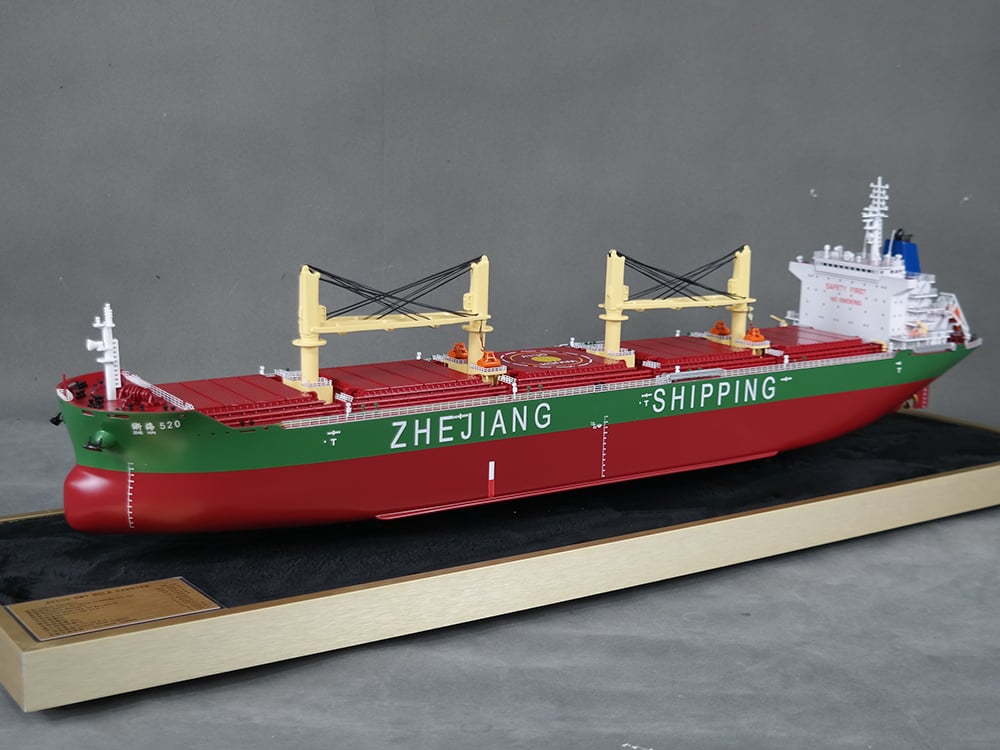
The visual realism of a model ship depends heavily on material choices. High-quality manufacturers select materials that replicate the texture, weight distribution, and reflective properties of actual ship surfaces. Fiberglass and resin composites are widely used for hulls because they support smooth finishing and hold paint well over time. Metal components, including railings, ladders, cranes, and anchors, are often fabricated from brass or stainless steel to match the appearance of real shipboard metalwork. Every material decision in a model ship build contributes to the final impression of authenticity.
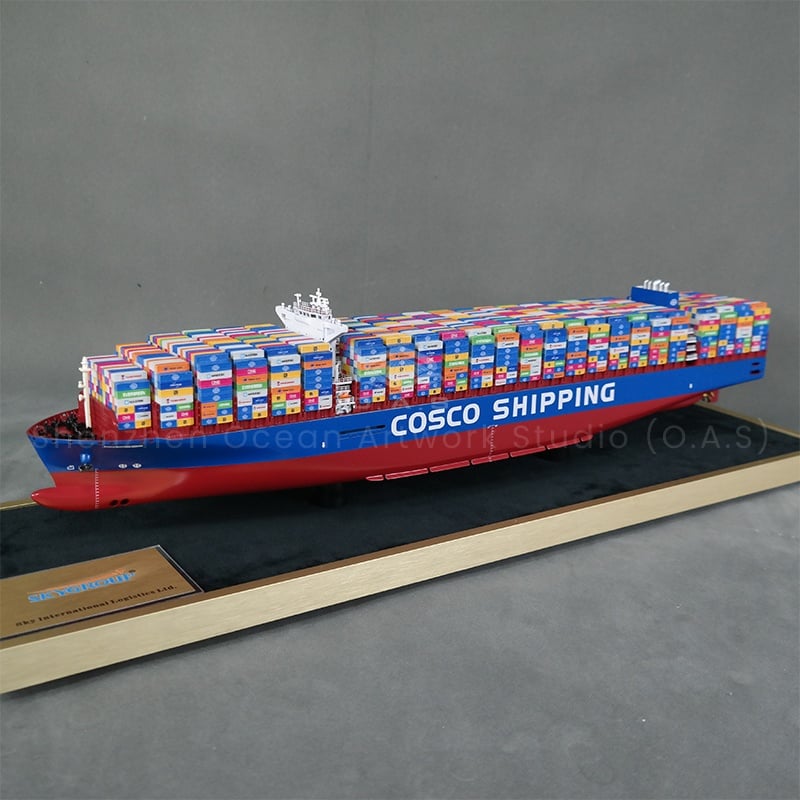
Color accuracy is a defining element of model ship realism, particularly for corporate or brand-commissioned pieces. Manufacturers use reference-matched paint systems to replicate the exact livery of a shipping company, including hull colors, waterline bands, superstructure tones, and funnel markings. For a model ship representing a Maersk container vessel, for example, the characteristic blue hull and white superstructure must be rendered with precise color values, not approximated. Industrial-grade spray systems and multi-layer finishing processes ensure paint adhesion, color depth, and long-term durability across the entire model ship surface.
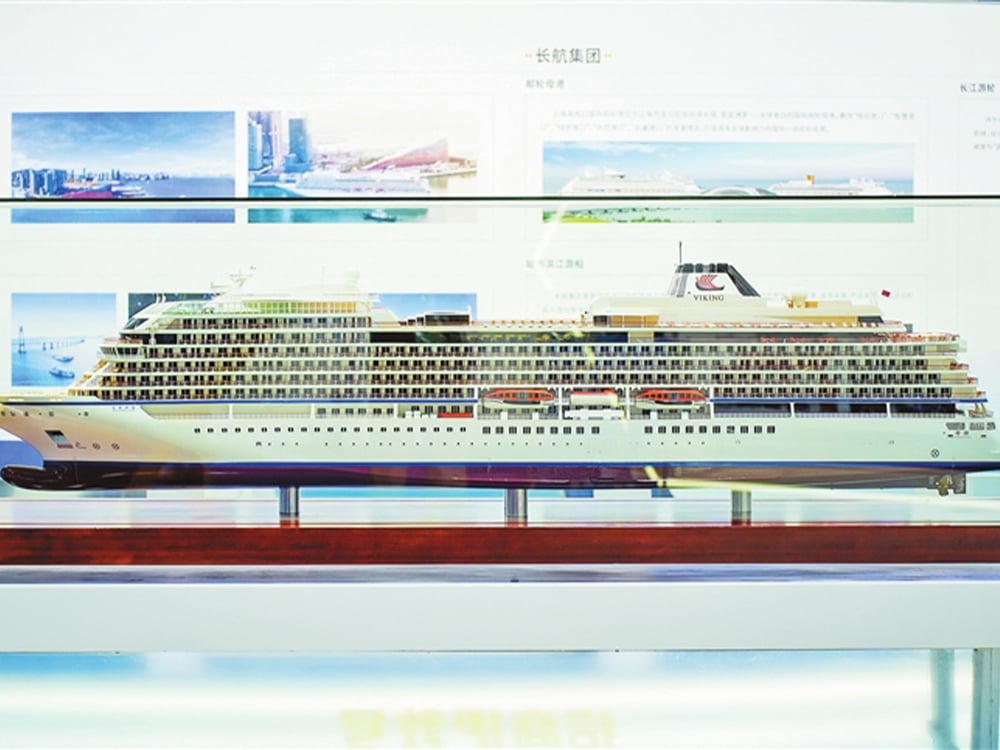
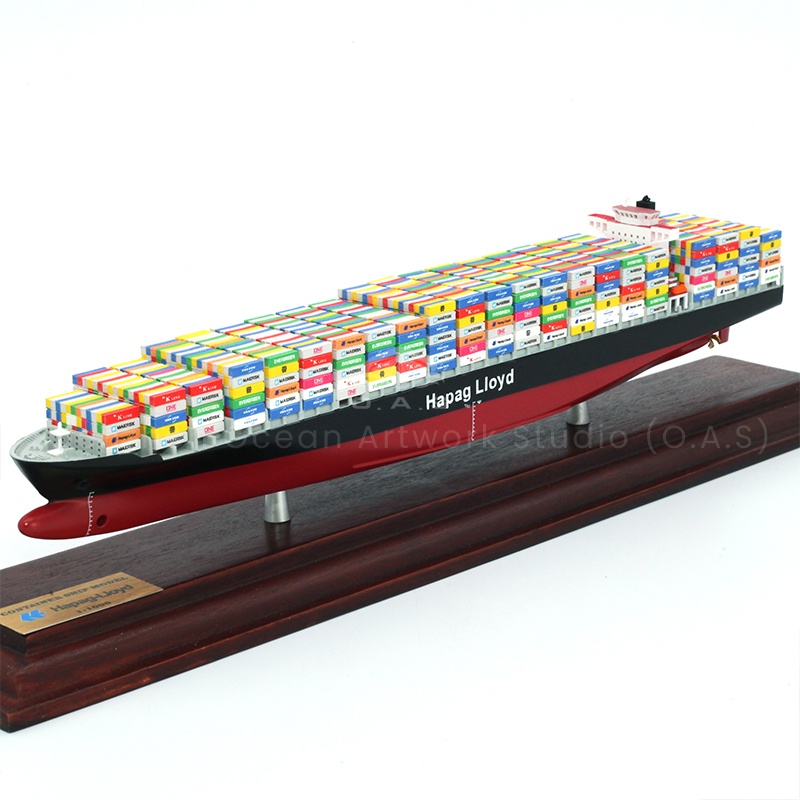
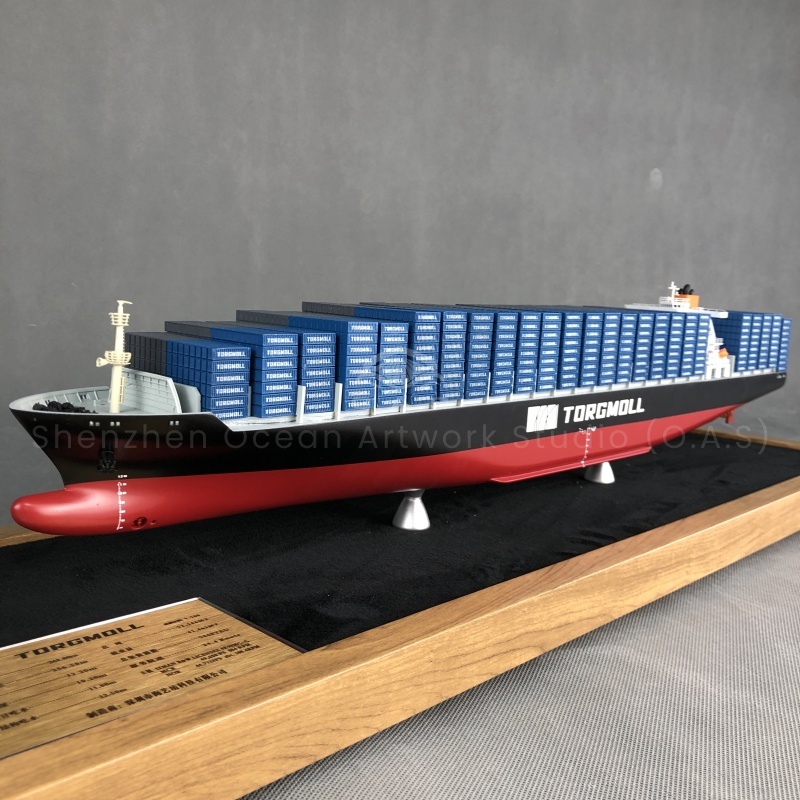
Professional model ship manufacturers implement inspection protocols at the component level before final assembly begins. Each individually produced part — hull sections, deck fittings, superstructure panels, and cargo elements — is measured and visually assessed against the original technical drawings. This approach catches dimensional errors early, before they become embedded in the finished model ship. For container ship models, this includes verifying the correct number, size, and arrangement of container bays, ensuring the model ship matches the real vessel's loading pattern rather than using a generic container layout.
During final assembly, manufacturers bring together all inspected components and apply finishing details that elevate a model ship from accurate to visually compelling. This includes weathering effects, rigging lines, navigation lights, and name lettering — all applied with reference to the real vessel's appearance. A model ship presented as a finished display piece must survive close inspection without revealing construction shortcuts or inconsistencies. Final quality checks involve comparing the completed model ship against reference photographs and technical specifications, confirming that every visible element meets the standards agreed upon with the client.
The model ship is also assessed for structural integrity at this stage. Display bases, internal armatures, and protective coatings are verified to ensure the model ship remains stable and visually pristine over years of display. For B2B clients, the durability of a model ship is as important as its initial appearance, since these pieces often serve as long-term brand assets in corporate environments.
A custom model ship typically takes between four and twelve weeks to produce, depending on the scale, complexity, and level of detail required. Larger and more detailed model ship projects, such as full container ship replicas with working cranes or lighting systems, require extended production timelines to meet accuracy and finishing standards.
Manufacturers verify a model ship against the real vessel by using original technical drawings, shipyard specifications, and reference photography throughout the production process. Dimensional checks at each stage confirm that the model ship maintains the correct scale ratios, and final comparison against approved reference images ensures visual accuracy before delivery.
Material quality directly affects the realism, durability, and long-term appearance of a model ship. High-grade materials such as fiberglass, brass, and industrial paints ensure that the model ship holds its shape, retains color fidelity, and resists deterioration in display environments. Low-quality materials compromise the visual integrity of the model ship over time, making professional-grade material selection a critical investment for B2B buyers.
 Hot News
2024-06-11
2024-06-07
2024-06-01
2024-06-01
2024-06-01
2024-05-25
Shenzhen Ocean Artwork Studio (O.A.S) Technology Co., Ltd. is a leading ship model manufacturer with over 15 years of experience. We specialize in designing and producing civil, military, and engineering ship models, working with top global shipping brands such as MAERSK, COSCO, and EVERGREEN.