EN
EN

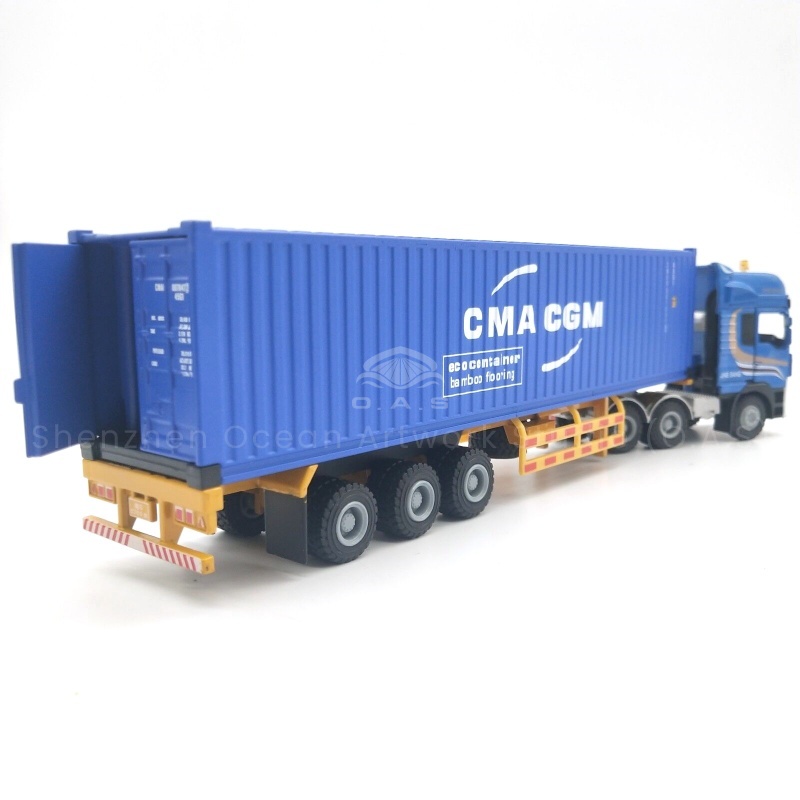
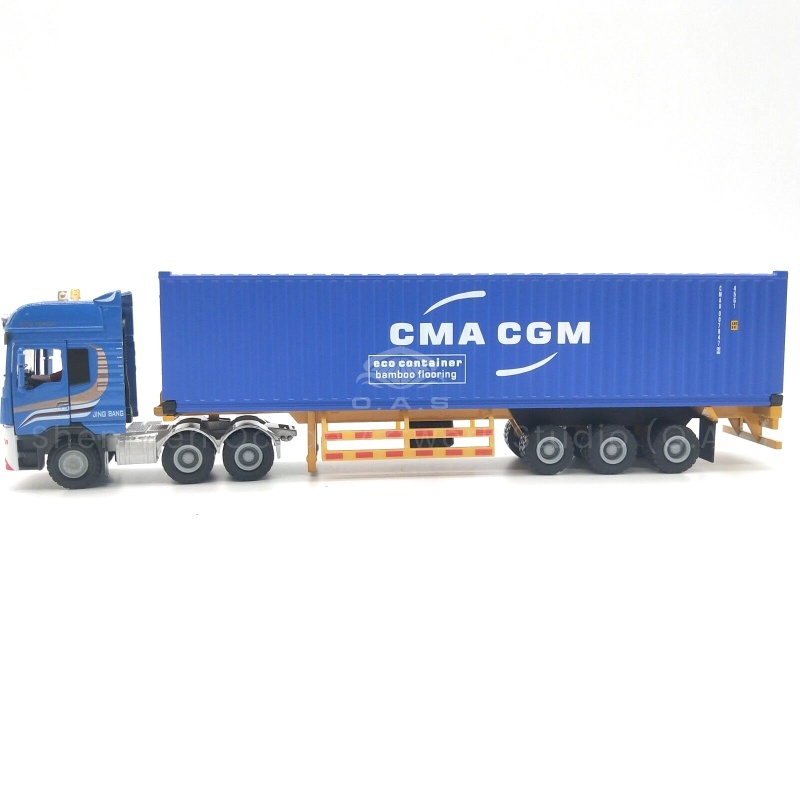
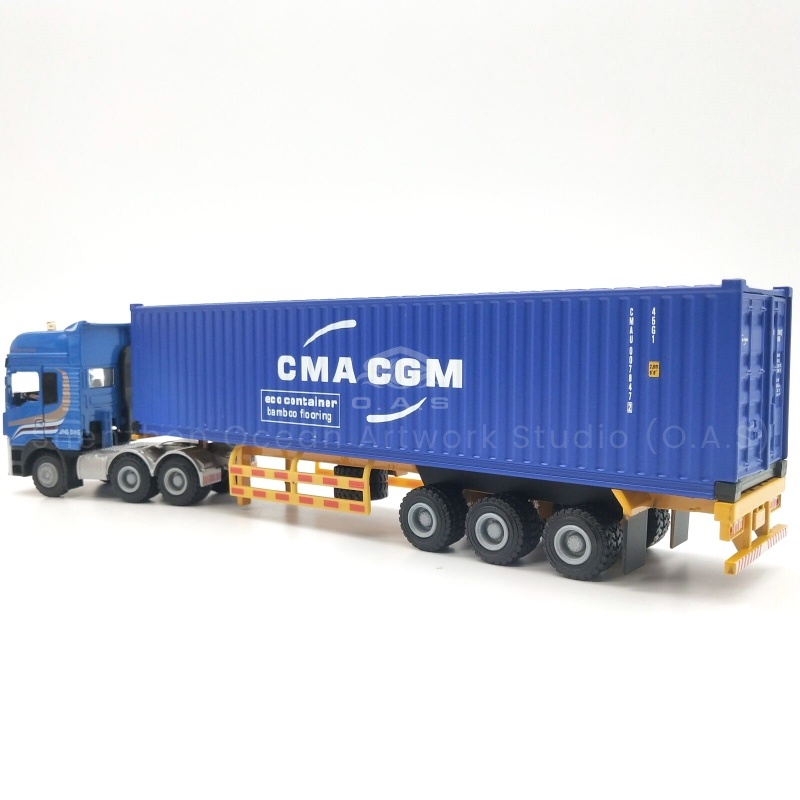
- PRODUCT DETAILS
- FACTORY
- WHY CHOOSE US
- RELATED PRODUCTS
PRODUCT DETAILS
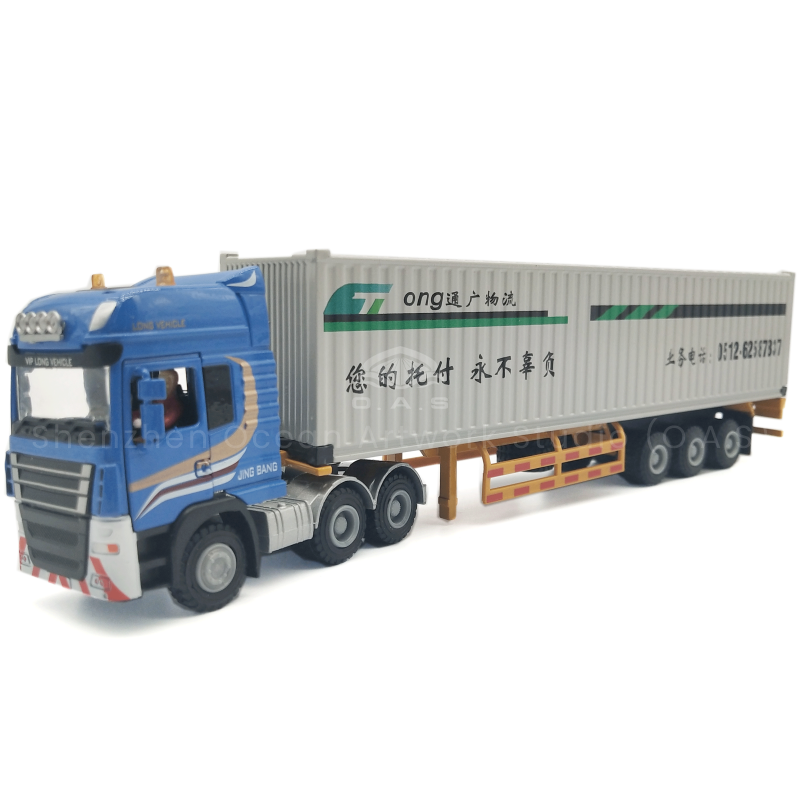
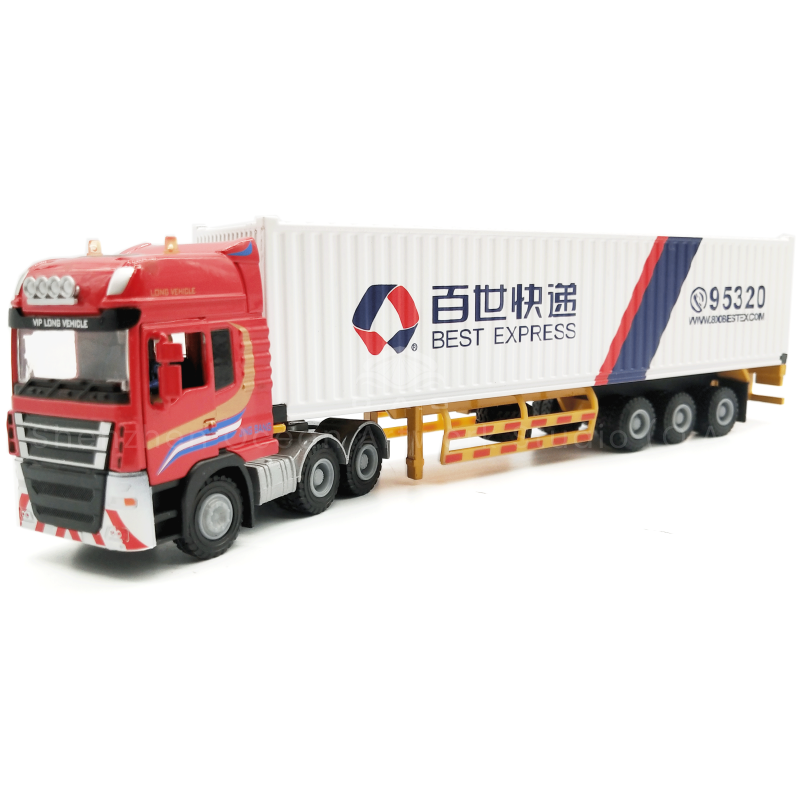
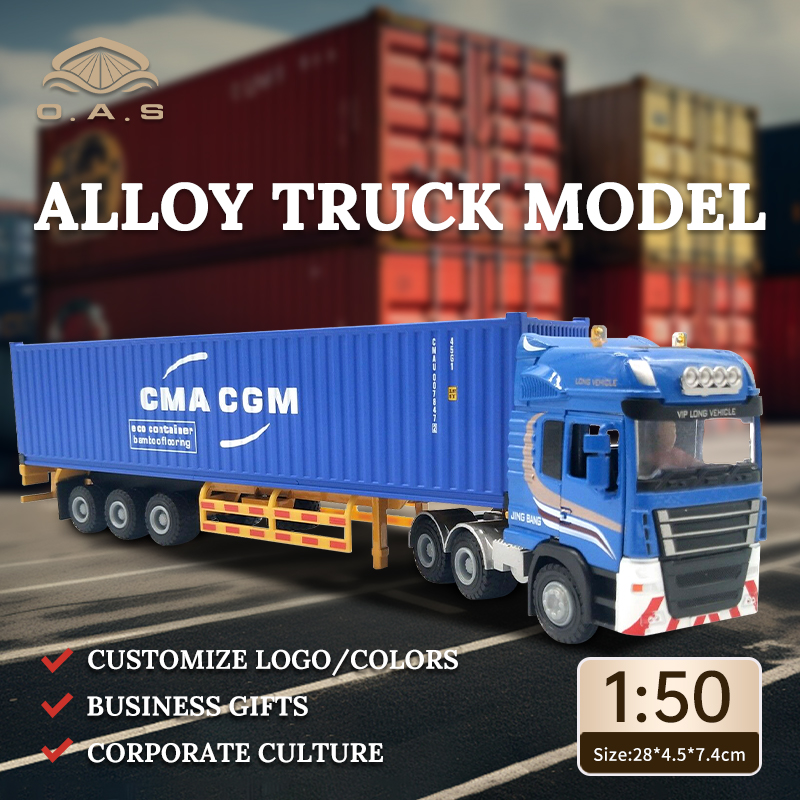
1:50 Alloy Truck Model — Colourful Head, Custom Logo, Built as a Fleet Set
Nobody orders just one. That was the first thing we learned about the colourful-head version of this truck model, and it quietly changed how we build it. Hand somebody a single die-cast cab in a company colour and it lands on a desk and stays there. Hand them four, each in a different colour, and the set ends up on a shelf where visitors actually stop and look.
So this page is not really about one truck model. It is about a 1:50 alloy truck model you can brand as a series: one chassis, one container, and four or six tractor heads in four or six different colours, with a single logo doing the work across the whole set.
Where the Colourful Head Actually Comes From
On a real container operation the trailers are largely interchangeable. The tractors are not. Owners paint the tractor unit, letter the doors, number the fleet, and often give each unit its own colour so a dispatcher can pick it out from across the yard. That habit is the whole reason a colourful-head truck model sells the way it does — it mirrors something the buyer sees every working day, rather than inventing a decorative idea in a design studio and hoping it lands. That is the test we apply to any new truck model idea before we cut a tool for it.
What You Get
Before the detail, here is what actually arrives when you order this truck model:
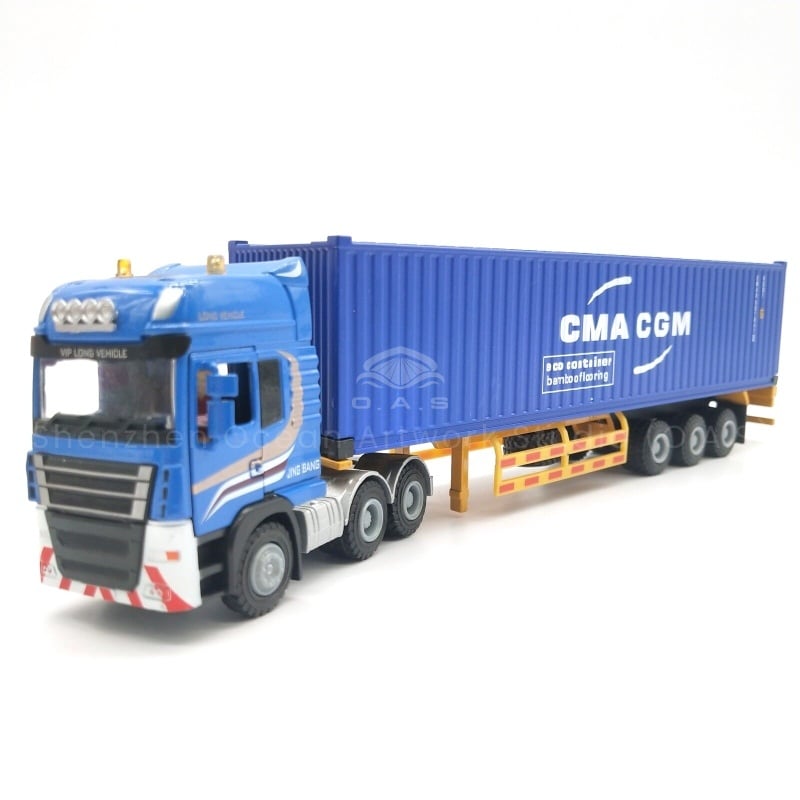
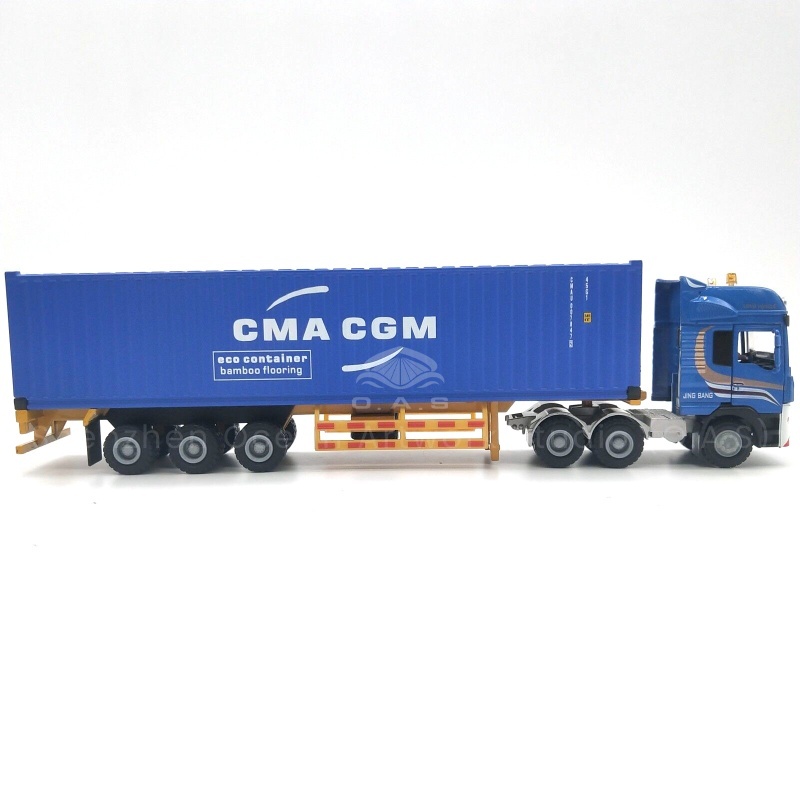
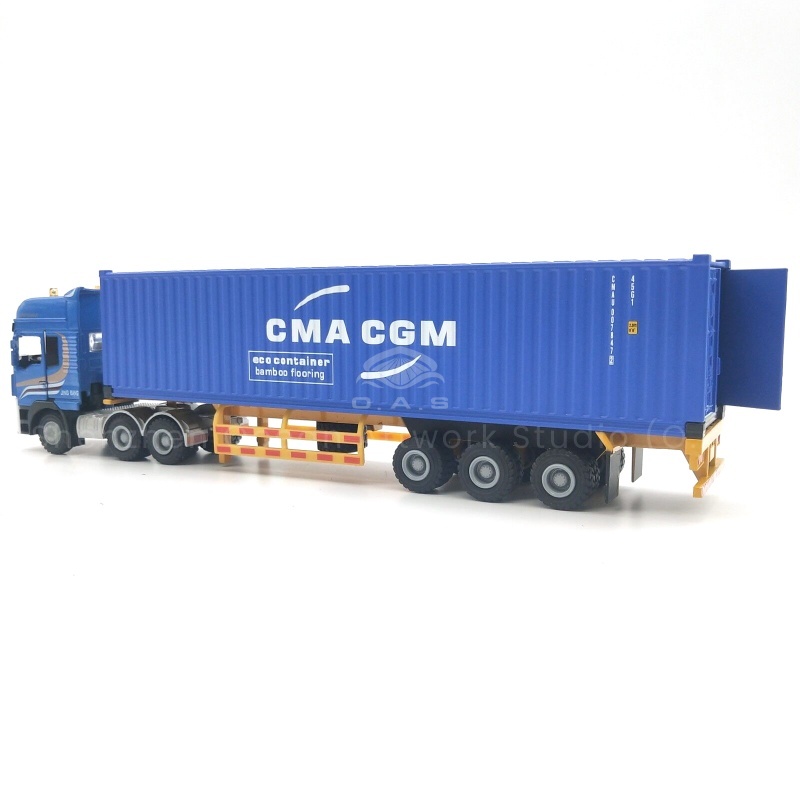
- Scale 1:50, measuring 33 × 5.9 × 8.7 cm
- Die-cast zinc alloy cab and chassis, with ABS and PVC detail parts
- Rubber tyres on rolling axles
- Cab painted in your nominated colours — one colour per truck model, or a two-tone scheme
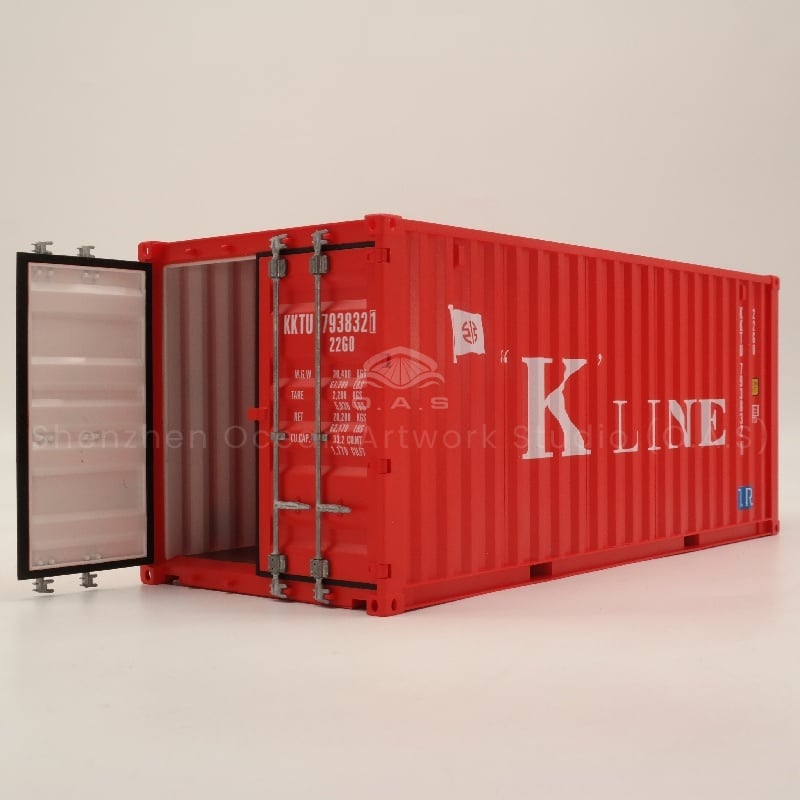
- Container and chassis graphics in tampo or silk-screen print
- Printed gift box with shaped foam insert, plus a custom collection card
- Optional acrylic display cover and engraved brass nameplate
For reference, a real tractor hauling a 40-foot box runs about 16.5 metres nose to tail, so dividing by fifty lands you on the 33 cm above. Anyone who works with the real equipment checks that proportion without being asked, which is why we do not take shortcuts on the cab profile of this truck model, however small the difference looks on screen.
Two Tools, Not One — Why the Tooling Decides the Price
Plenty of buyers assume a truck model comes out of a single mould. It does not, and the difference shows up in the quote. Ask why one truck model quotation sits 30% under another and the tool set is usually the whole answer.
The cab needs its own multi-cavity die. The chassis needs another. Container, wheels, tyres, mirrors and the smaller fittings follow, and by the time a 1:50 alloy truck model is ready for production you are looking at a tool set rather than a tool. Each cavity is cut to tolerances measured in hundredths of a millimetre, because at this scale a tenth of a millimetre is a visible panel gap on the finished truck model.
Moulds also wear. A production tool will run into the tens of thousands of shots before it needs attention, and when a client returns two years later for a repeat order we would rather re-check the tool than assume it. That is a boring answer to give a customer, but it is the honest one, and it explains something clients notice for themselves: a repeat run of a truck model usually lands closer to the original sample than a rushed first run ever does.
The Paint Is the Hard Part
Alloy and paint do not fall in love on the first date. Zinc alloy is smooth, non-porous and slightly oily from the casting process, and if you skip the preparation the finish will look perfect in the sample and chip on somebody's desk a year later.
Our line runs a preparation step, a primer, then colour coats and a clear top coat, with a bake between stages. For a colourful head that means the cab colour gets its own pass — a two-tone cab, body one colour and roof another, is two masking operations and two spray cycles. It costs more, and we say so up front rather than quietly delivering a single tone and hoping nobody notices.
Getting the colour right starts before any of that. Send a Pantone number, or a physical reference: a decal, a livery card, a paint chip, a photograph shot outdoors. Screens lie, particularly on corporate reds and deep blues, and we have seen more colour disputes caused by a JPEG than by a paint formula.
One more thing worth knowing: gloss and matte read very differently on a truck model. Gloss lifts the cab and photographs well; matte settles the container down and hides handling marks. Most of our logistics clients finish the cab glossy and the box matte, and it holds up in the field. Either way, we spray a test panel on a spare casting first and photograph it, so the finish you approve is on a real truck model panel rather than on a word in an email.
Twelve Things We Check Before a Truck Model Ships
Every unit gets a visual inspection on the decorated parts, then an AQL sample check on the batch. In practice that means working a specific list: sink marks on the cab roof, flash on the container corners, tampo registration drift, a wheel that binds instead of rolling, mirrors snapped or misaligned, hinge pins gone tight. None of those defects are visible in a catalogue photograph. All of them are obvious in a buyer's hand — which is why no truck model of ours ships on the strength of a good sample alone.
We weigh-check finished assemblies too. A 1:50 die-cast truck model should land just under a kilogram; if a unit comes in light, something is missing inside the chassis and the truck model will rattle when it is picked up. Not glamorous work, but it catches problems before your name is on the box.
What Buyers Inspect First, Every Time
If you have ever unboxed a competitor's truck model, you already know the order. The logo first — is it sharp, is it straight, is it where you asked for it. Then the wheels: do they roll, do the tyres look like rubber or like grey plastic. Then the container doors. Then the weight, which people judge by hand, not by spec sheet.
Everything on that list comes down to one question: did the factory treat this piece as a promotional give-away or as a scale model? We build every truck model as the second thing, and that is the only reason we are comfortable putting a client's logo on it. If a supplier cannot tell you where those checks sit in their line, they have not walked it recently.
The Box, the Card and the Unboxing Moment
The collection card is the piece that surprises people. It is a small printed card, branded, sometimes numbered for a limited run, and in our experience it is the item recipients keep the longest — occasionally longer than the truck model itself, because a card fits in a wallet or a drawer and does not need shelf space.
Around that we build the rest of the presentation: a printed gift box, a shaped foam insert so nothing shifts in transit, and an optional acrylic cover or engraved plate for awards and anniversaries. For a fleet set, we can also box the truck models together in a single presentation case rather than shipping each unit individually — worth asking about if the set is going to one person rather than five.
FACTORY
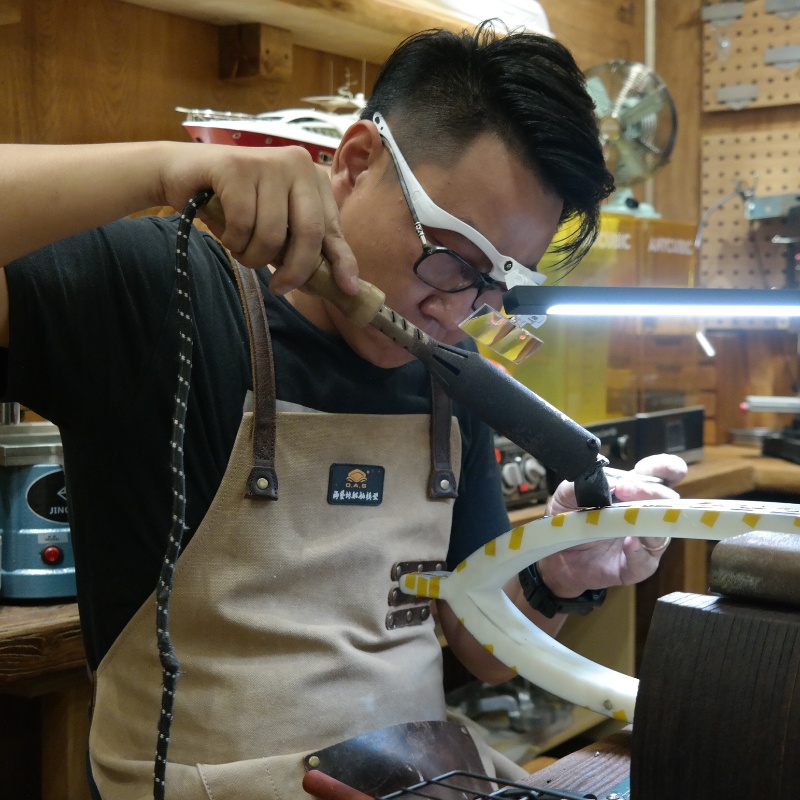
Model making
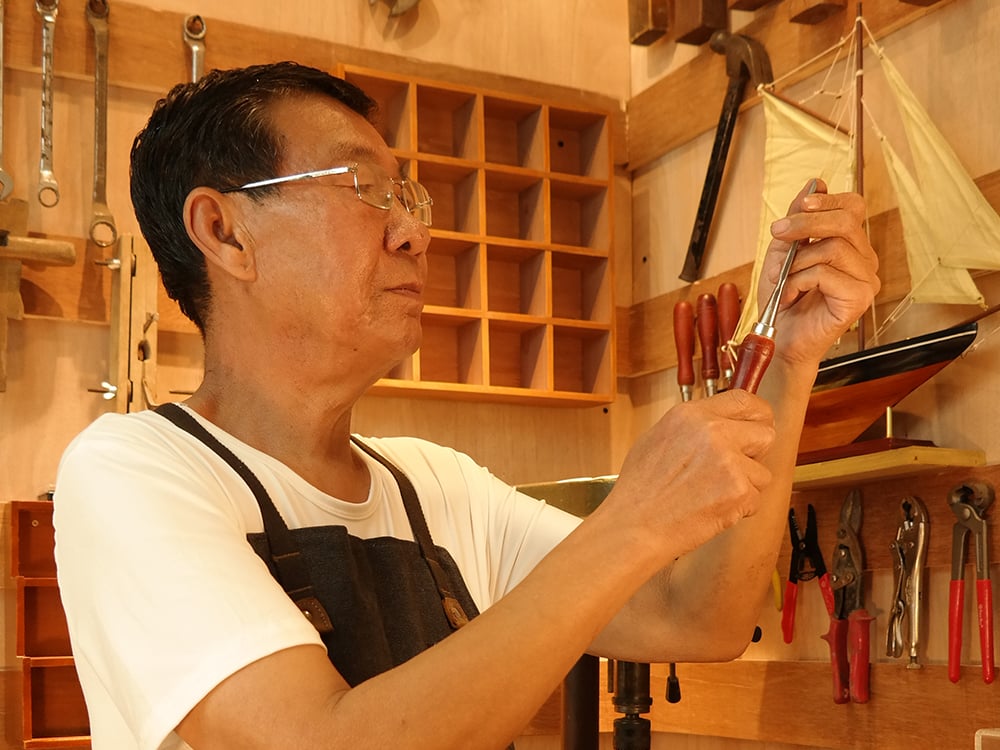
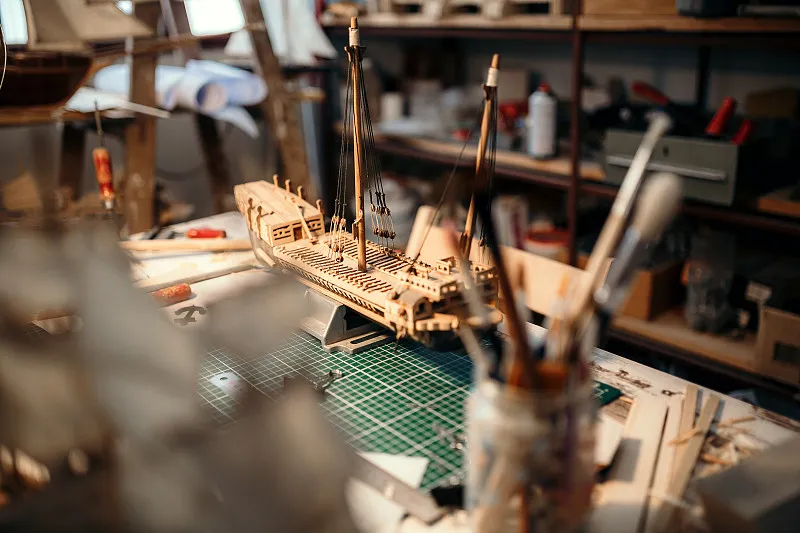
We have a professional model making team.
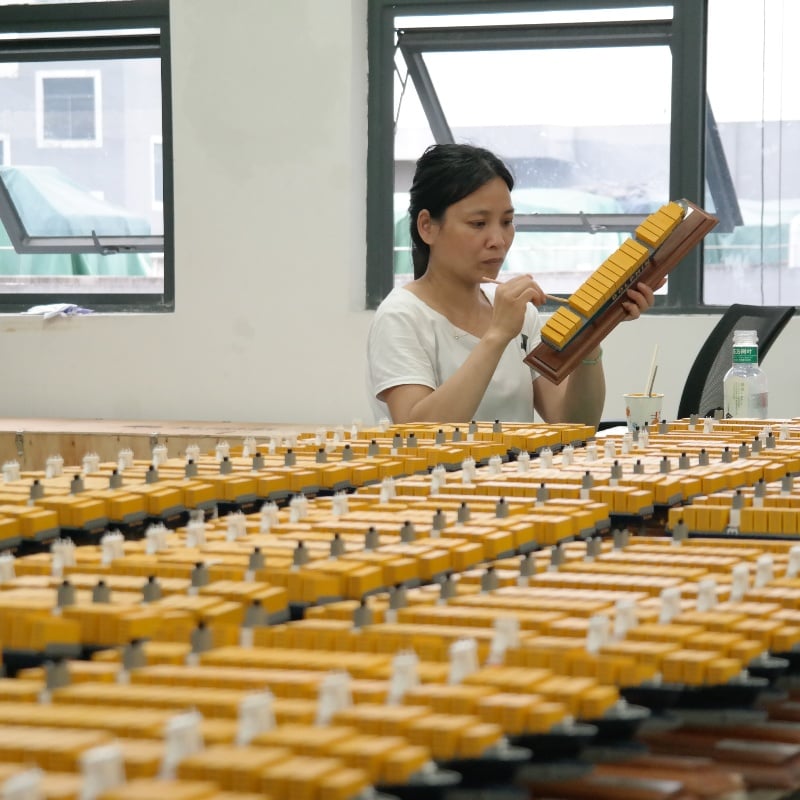
Paint in
Any color can be customized.
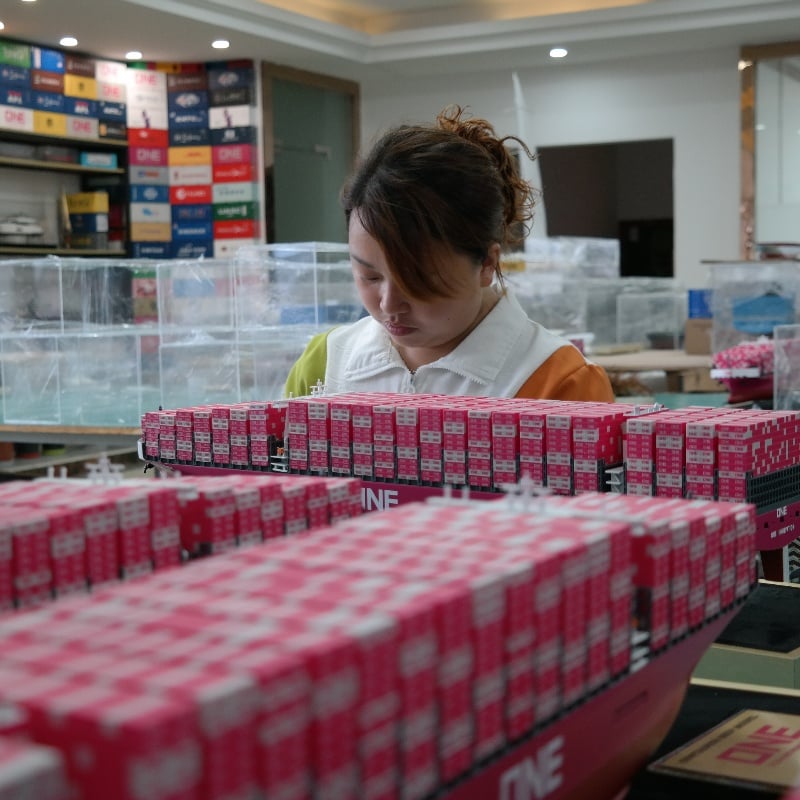
Check
We will check the quality of the model.
WHY CHOOSE US
1. Customization Expertise
We pride ourselves on our ability to fulfill even the most intricate customization requests. Whether you provide us with detailed sketches or simply a concept, our team can create a ship model that perfectly captures your vision.
2. Professional Service
With a dedicated team of experts in ship model design and production, we guarantee exceptional quality and reliability in every product we deliver. Our commitment to customer satisfaction ensures you receive not just a model, but an exceptional experience.