EN

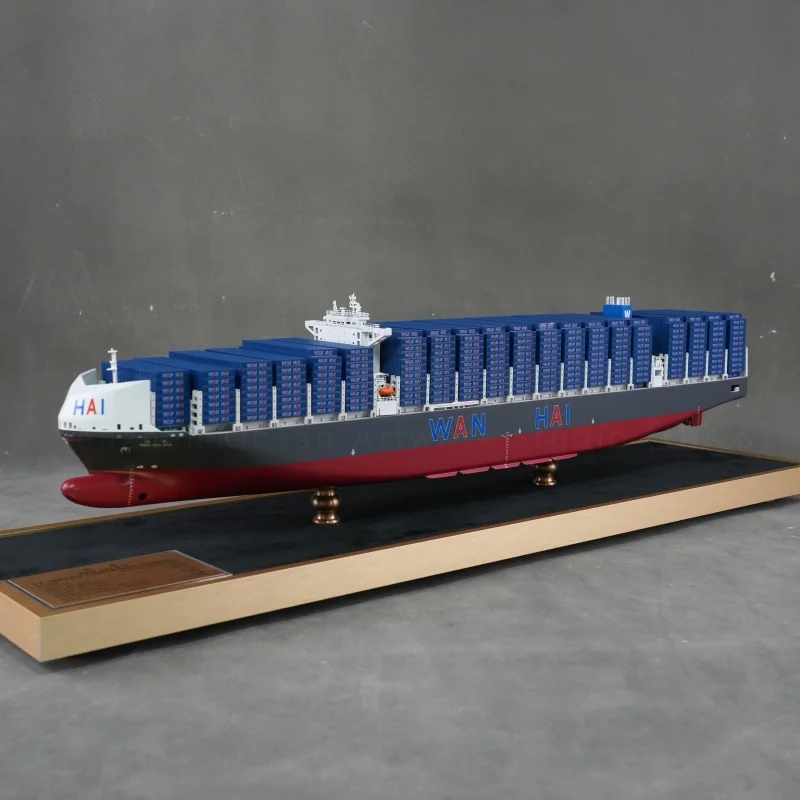
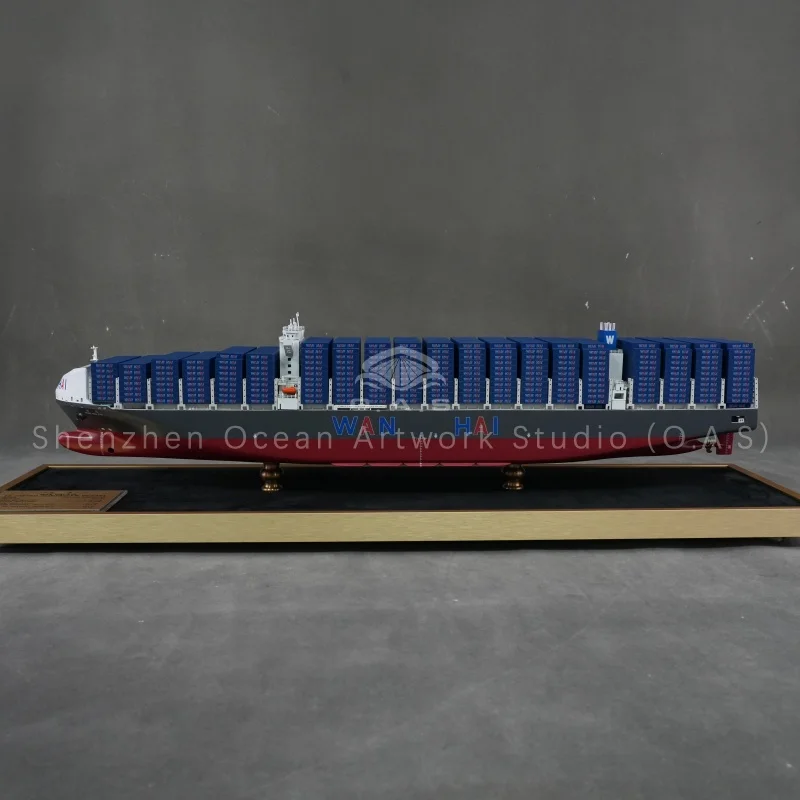
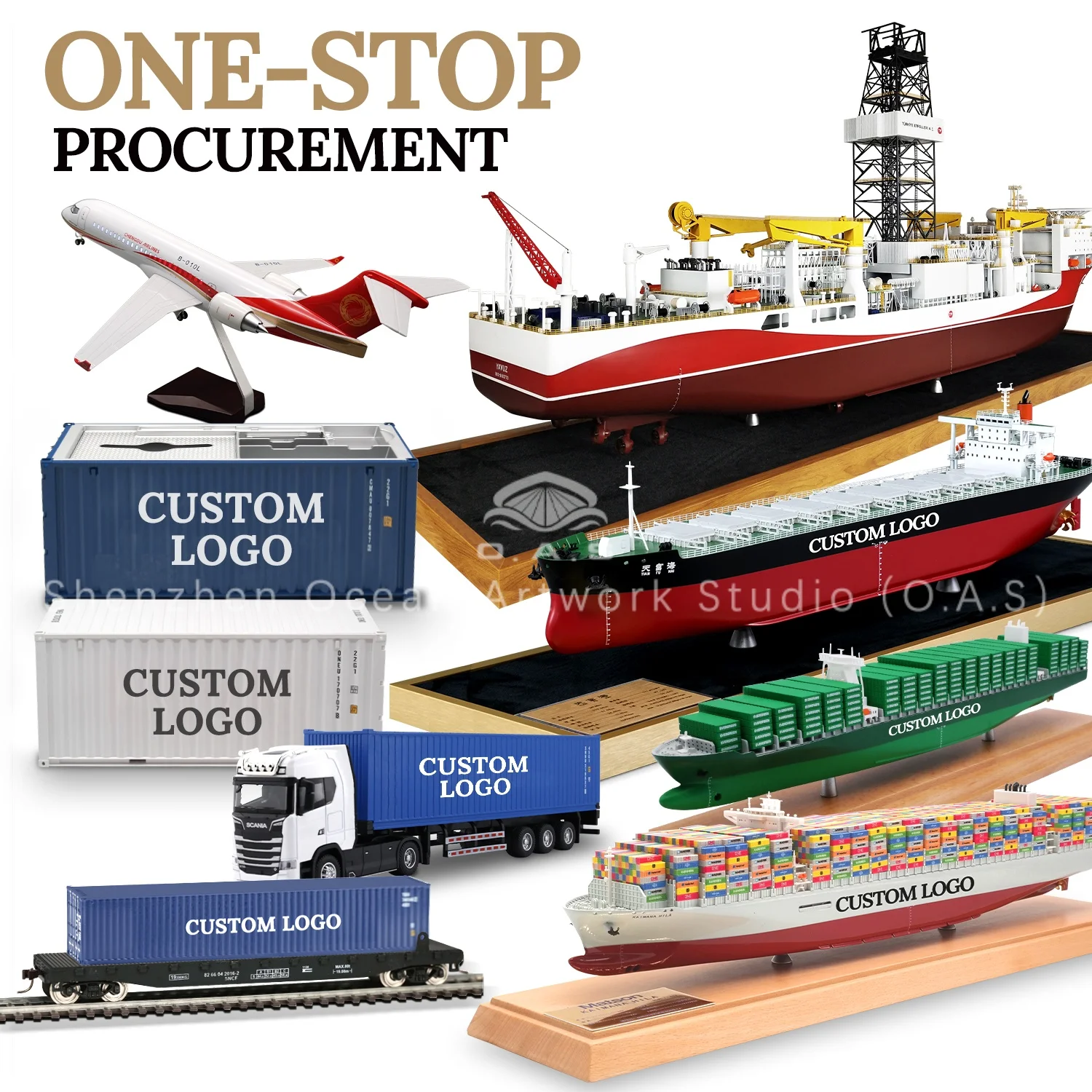

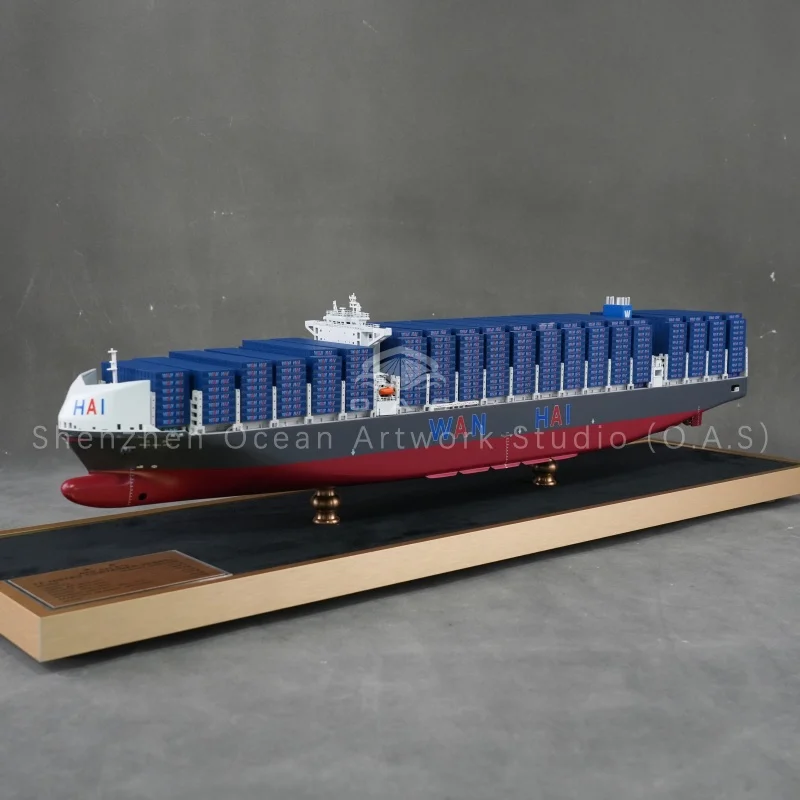
【LAC】O.A.S Manufacturer Handicraft Ship Model Upscale Business Gifts Custom 65cm WAN HAI Container Ship Model
- PRODUCT DETAILS
- FACTORY
- WHY CHOOSE US
- RELATED PRODUCTS
PRODUCT DETAILS
65 cm WAN HAI Container Ship Model — Custom ABS Build by O.A.S
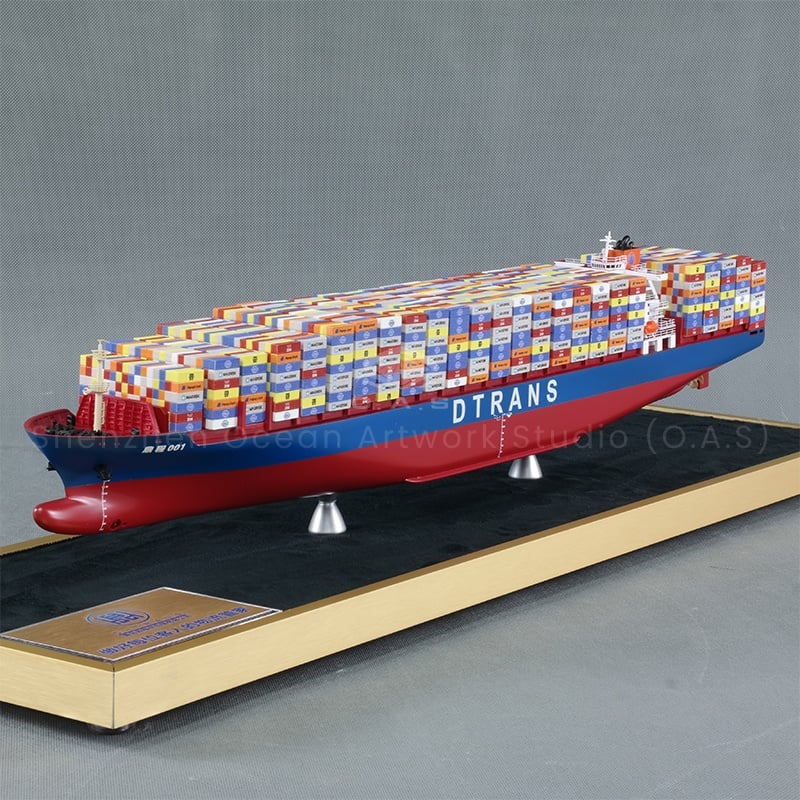
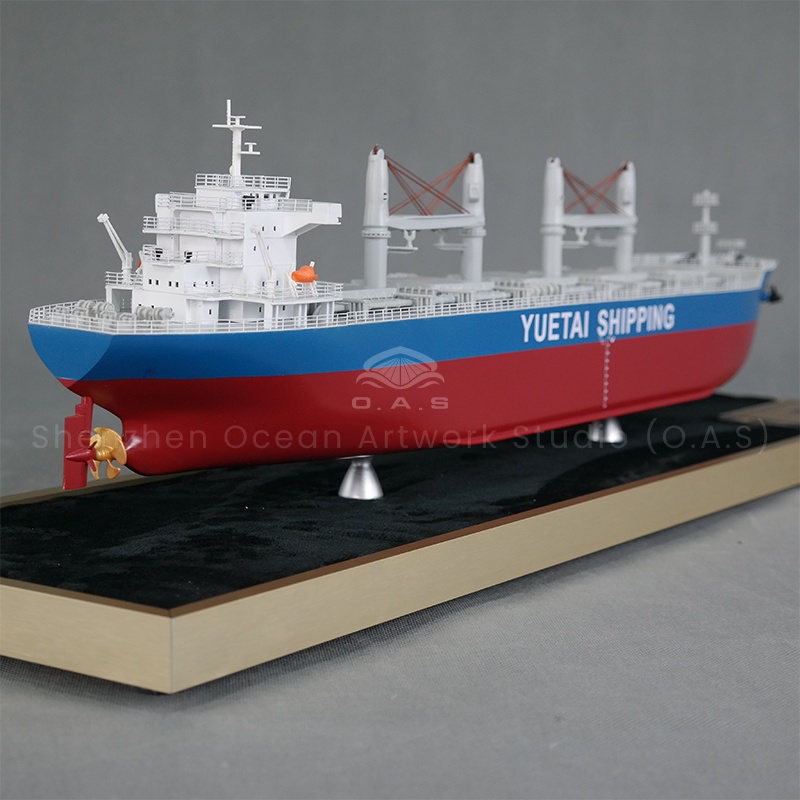
Most of the hulls we build hide their cargo, and a container ship model is the exception that decides how the whole job gets priced. A bulk carrier keeps it under steel hatch covers, and if you want to show it you have to cut the deck open and model the hold. A container ship does the opposite — it wears the cargo on top, five or six tiers high, laid out in a grid that anyone who has stood on a quay recognizes before anyone explains it. That single difference is why a container ship model is judged by completely different rules from every other hull we build, and why the two jobs share almost nothing once they reach the bench.
This one is 65 cm, ABS, built to a WAN HAI vessel, and it can be painted to any ship you actually operate. Ocean Artwork Studio (O.A.S) has been doing this in Shenzhen since 2008, and the container ship model line is one of the oldest we run.
Specification
Everything below the hull length is set by the vessel, so read this as the standard configuration of a custom container ship model rather than a fixed specification.
Two rows in this table change from job to job, and both of them are discussed further down the page.
Item |
Detail |
Product |
65 cm WAN HAI container ship model, factory-made, custom livery available |
Length overall |
65 cm (25.6 in) — hull only, excluding base |
Scale |
Set by the vessel: 1:228 for a 1,100 TEU feeder, 1:452 for a 4,500 TEU Panamax, 1:563 for a 14,000 TEU neo-Panamax |
Material |
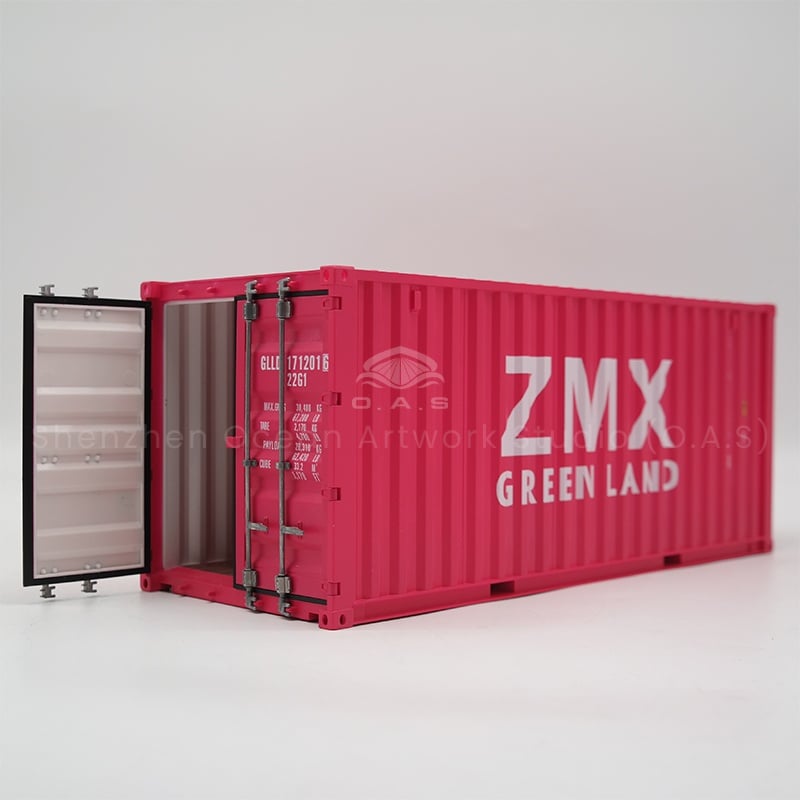
Vacuum-formed ABS hull shell, injection-molded ABS superstructure, molded ABS containers, brass mast and rigging wire |
Deck cargo |
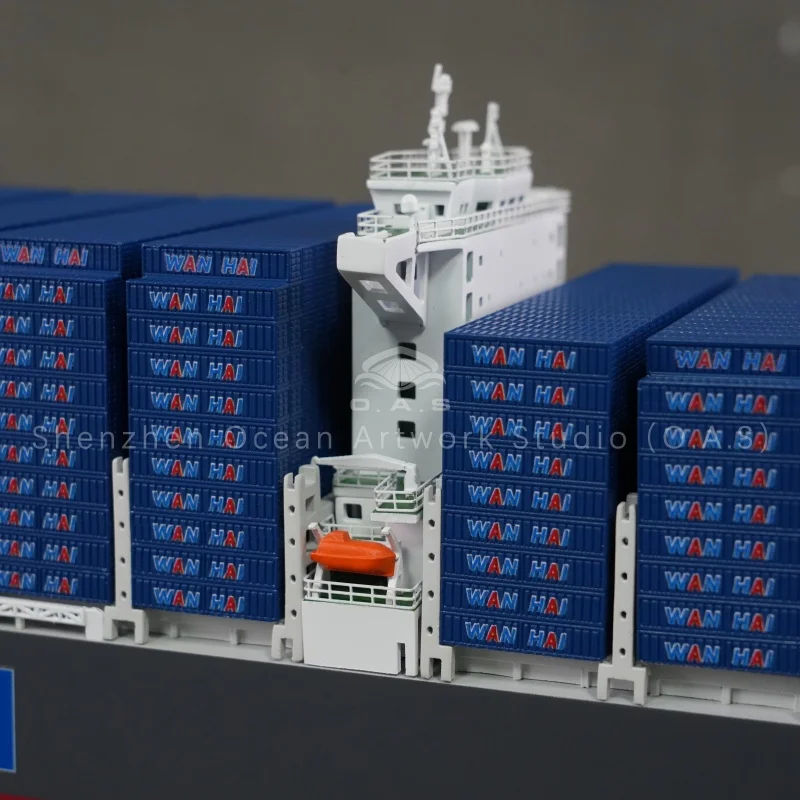
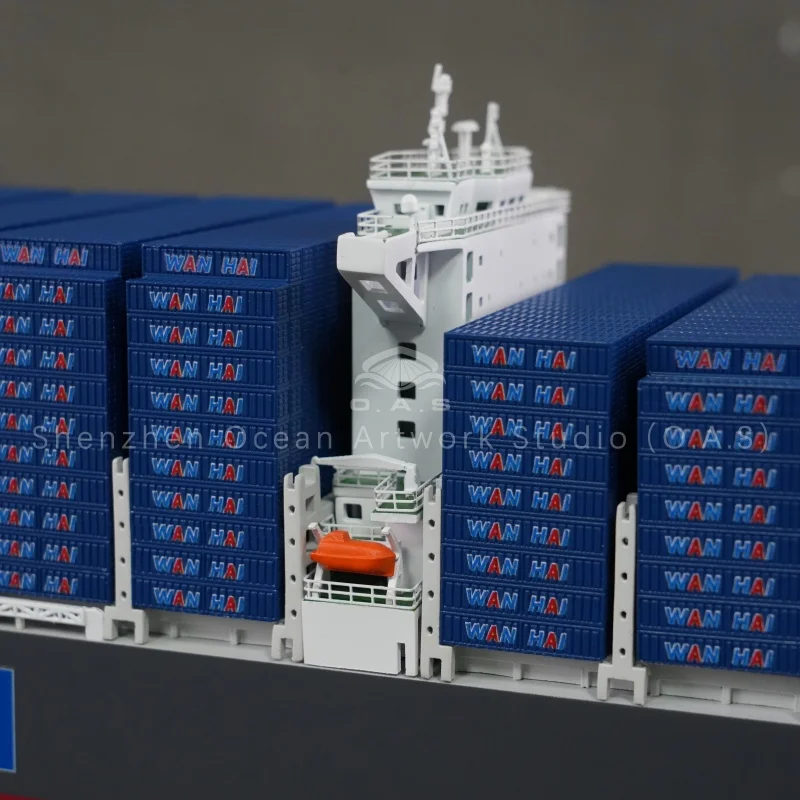
Individually molded containers, stacked to the real bay / row / tier pattern of the vessel |
Hull options |
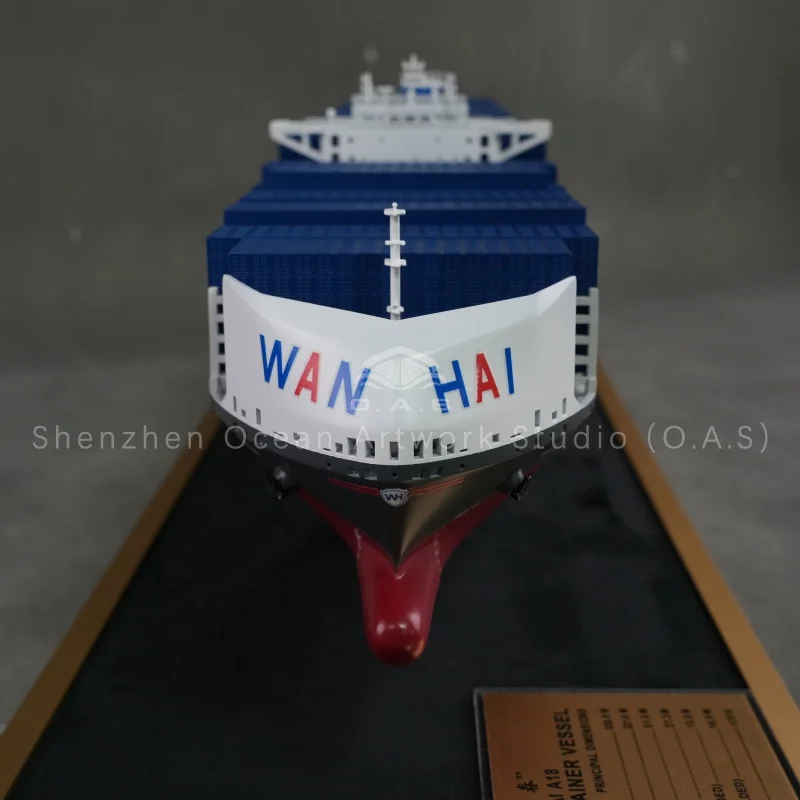
Waterline (flat-sitting) or full hull with bulbous bow, keel line and rudder |
Branding |
Pantone or RAL matched hull and boot-top, printed funnel mark, engraved base plaque |
Base |
Wooden display board with a metal name plate; acrylic cover optional |
Packing |
Foam-fit box inside a printed carton, or a gift box for single units |
Samples |
5–7 working days |
Mass production |
20–35 working days, depending on quantity and box count |
Minimum order |
1 piece |
What 65 cm actually buys you on a container ship
Length is the one number every buyer quotes first, and on a container ship model it is the least informative one. Container ships are long and narrow compared with a bulker or a tanker, so a fixed model length gives you wildly different beams depending on which ship you picked. No two container ship models at 65 cm look alike, and the reason is the beam rather than the length.
Vessel class |
LOA × beam |
Scale at 65 cm |
Model beam |
Container rows across |
1,100 TEU feeder |
148 m × 23.5 m |
1:228 |
103 mm |
9 |
4,500 TEU Panamax |
294 m × 32.3 m |
1:452 |
71 mm |
13 |
8,000 TEU post-Panamax |
335 m × 42.8 m |
1:515 |
83 mm |
17 |
14,000 TEU neo-Panamax |
366 m × 51.2 m |
1:563 |
91 mm |
21 |
If you take one number from that table, take the beam: a finished container ship model is specified by length and experienced by beam. Read the beam column again, because it goes the wrong way. The smallest ship on that list gives you the widest model. A 148 m feeder has a length-to-beam ratio near 6.3, so at 65 cm it comes out 103 mm across the deck. A Panamax sits near 9.1 — a much finer hull — and lands at 71 mm. If you are ordering a display piece for a reception desk, that matters more than the length ever will: the feeder reads as a chunky, substantial object, the Panamax reads as a blade, and both are "65 cm".
The deck is a grid, and the grid has names
This is the part of a custom container ship model that separates people who have loaded a ship from people who have only photographed one.
Nobody in this industry says "the boxes on the left". Deck cargo is stowed to three coordinates, and a container ship model that gets them wrong looks wrong to the people you are giving it to, even if they cannot articulate why.
Bay runs fore and aft on a container ship model deck and counts in 20-foot slots. Odd numbers are 20-foot positions, even numbers are 40-foot positions, which is why a 40-foot box occupies two bay numbers and why the numbering jumps. Row runs across the ship, with 00 on the centerline, odd numbers to starboard and even to port. Tier is vertical, and here is the detail most model shops have never heard: below deck the tiers are even numbers starting at 02, and on deck they start at 82. The first tier sitting on a hatch top is tier 82, and the one above it is 84.
Why 82 and not 02? Because the numbering has to work across the whole stow without ever repeating, and the deck tier band was pushed up out of the way of the hold. We lay every custom container ship model out to those coordinates before a single box is glued, and we mention it because it is the sort of thing a Wan Hai ops manager notices in about four seconds. Ask that same person to check a tier number and they will. A 65 cm container vessel model with a tidily renumbered deck is a tell that the deck was laid out by eye.
At 1:452, five tiers of deck cargo — which is a normal Panamax deck stow — is 28.6 mm of stacked plastic. The hull is 71 mm wide. So roughly 40% of the widest dimension of this thing is cargo rather than ship. That ratio is the reason we treat the deck load as the primary work on a 65 cm container ship model like this and the hull as the secondary work. It is backwards from a bulker, where the hull is everything and the deck is flat. That is also why a container ship model and a bulk carrier model of the same length get quoted by completely different methods.
Packing, the plaque, and the gift question
This is the length that gets bought as a gift more than any other container ship model size we make, and gifts behave differently from display pieces. A gift goes to somebody who did not choose it, gets opened in front of a room, and is judged in about four seconds, most of them unfair. A container ship model bought as a present has one requirement a display piece does not: it has to arrive looking like a present rather than like freight.
That starts with the carton. A 65 cm hull in a foam-fit box inside a printed carton survives a courier network; the same finished container ship model in a rigid gift box does not, so single-unit gift orders ship the presentation box inside an outer carton. The base plaque is the part people underestimate: a metal plate with the vessel name, the owner, and a date reads as a presentation piece on a corporate container ship model, and a printed sticker on a wooden board does not. We engrave. It costs a few dollars and it is the difference between a present and a purchase. We also keep the artwork on file, so a repeat gift container ship model matches the first one.


FACTORY
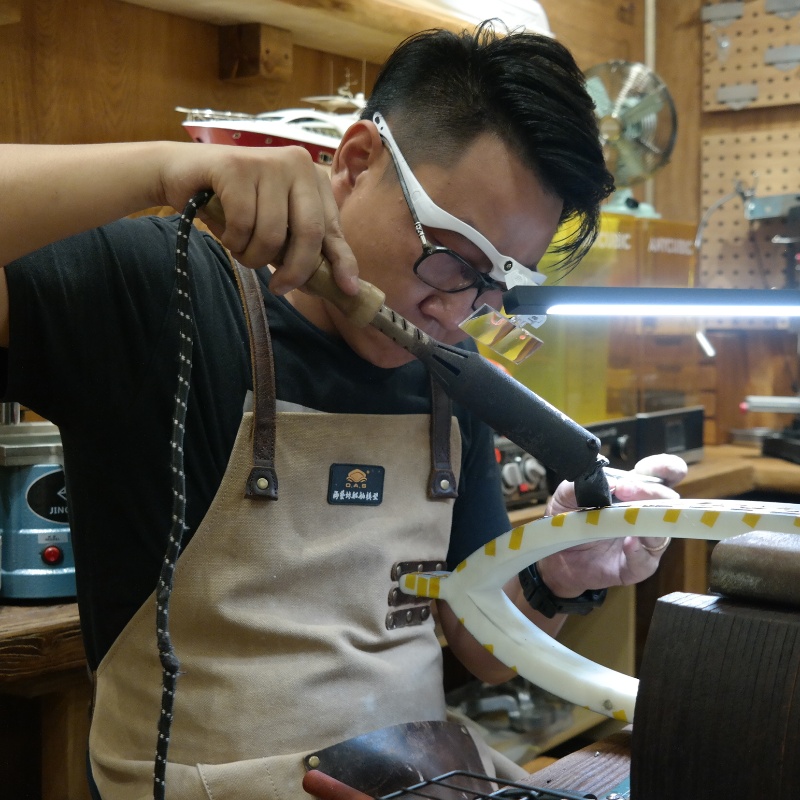
Model making
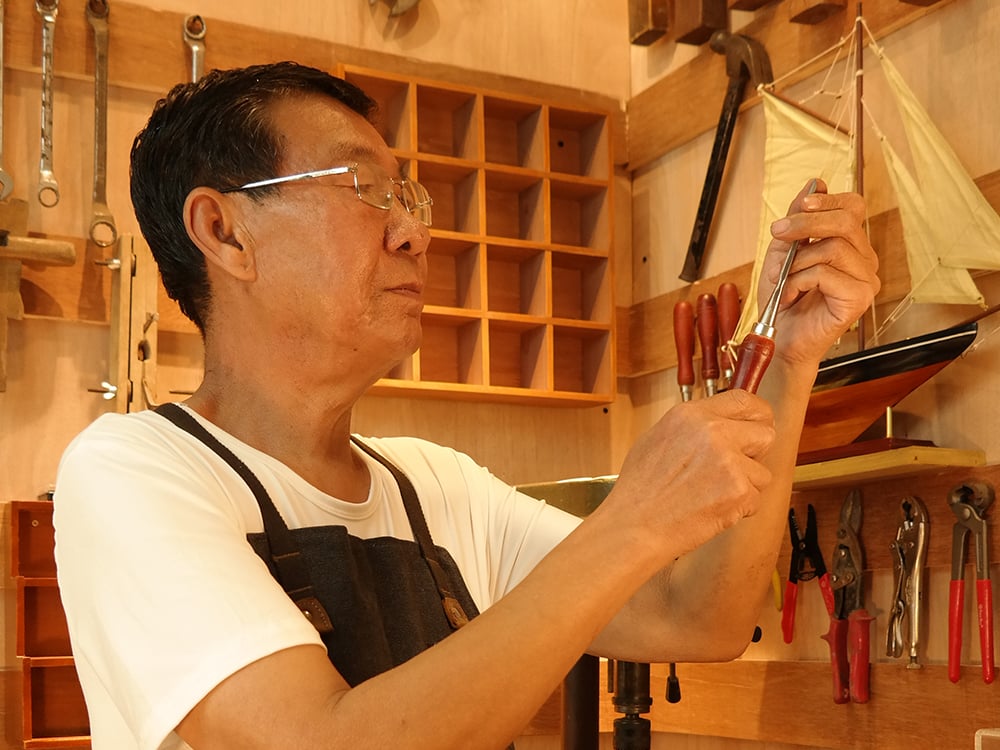
We have a professional model making team.
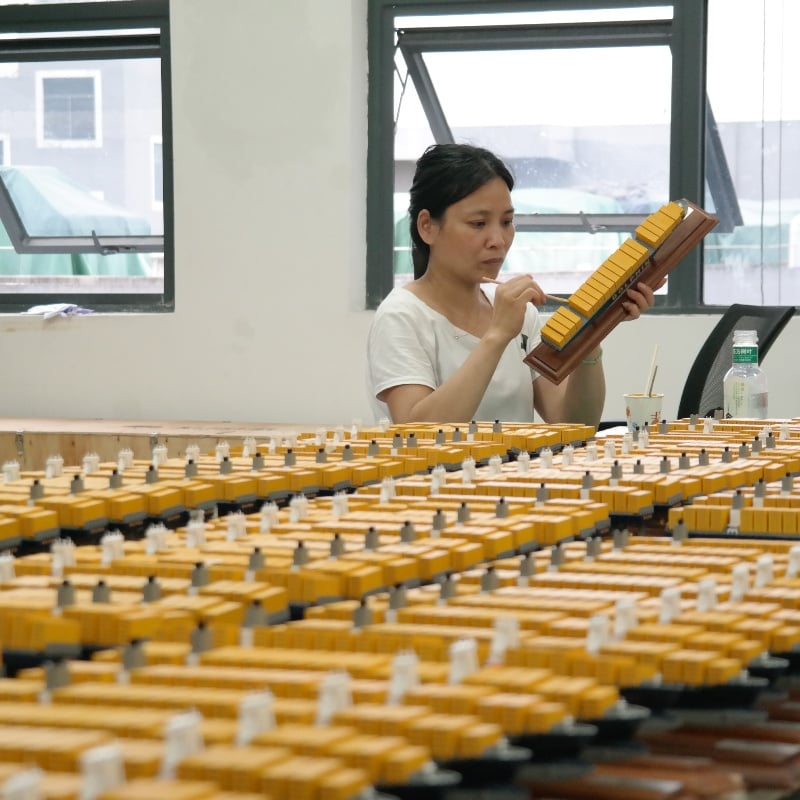
Paint in
Any color can be customized.
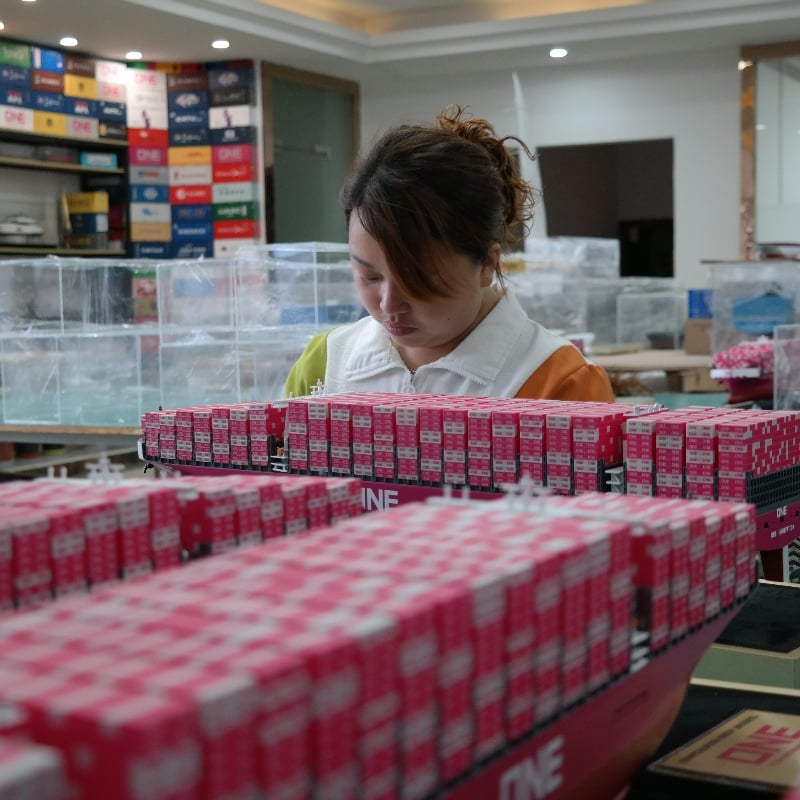
Check
We will check the quality of the model.
WHY CHOOSE US
1. Customization Expertise
We pride ourselves on our ability to fulfill even the most intricate customization requests. Whether you provide us with detailed sketches or simply a concept, our team can create a ship model that perfectly captures your vision.
2. Professional Service
With a dedicated team of experts in ship model design and production, we guarantee exceptional quality and reliability in every product we deliver. Our commitment to customer satisfaction ensures you receive not just a model, but an exceptional experience.