EN
EN

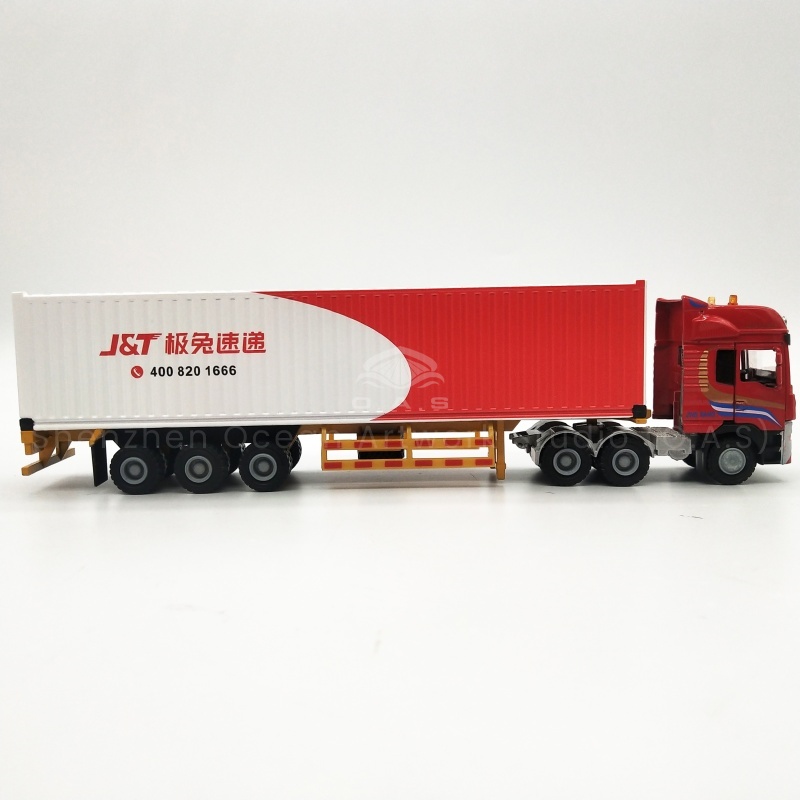
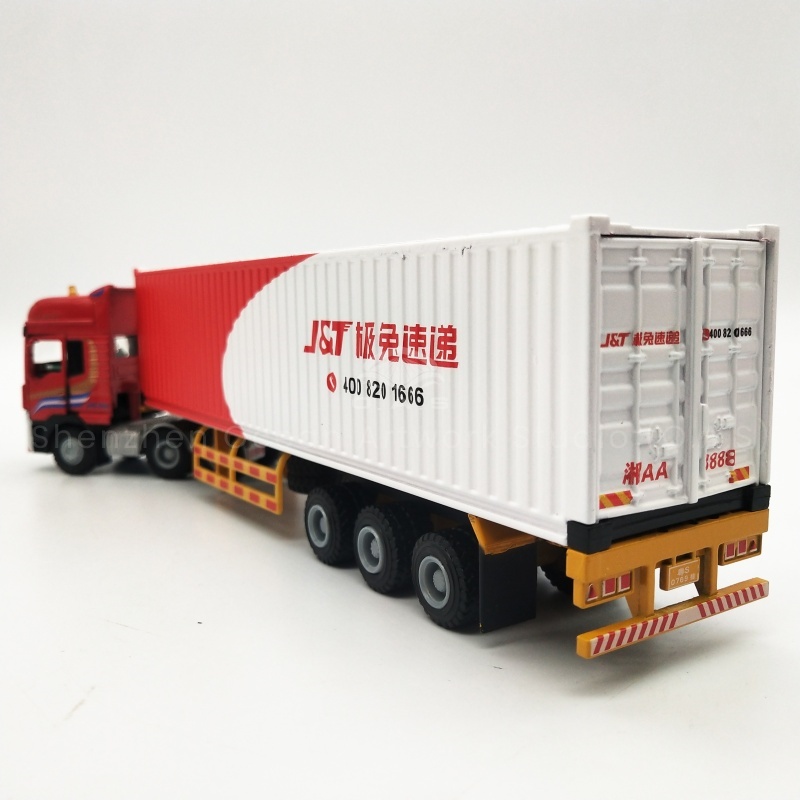
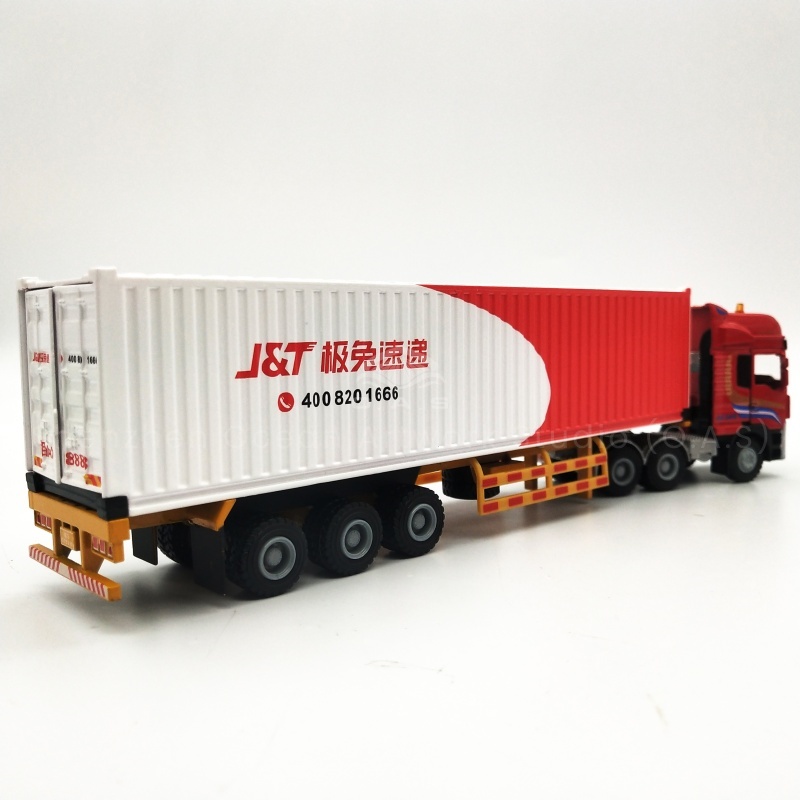
- PRODUCT DETAILS
- FACTORY
- WHY CHOOSE US
- RELATED PRODUCTS
PRODUCT DETAILS
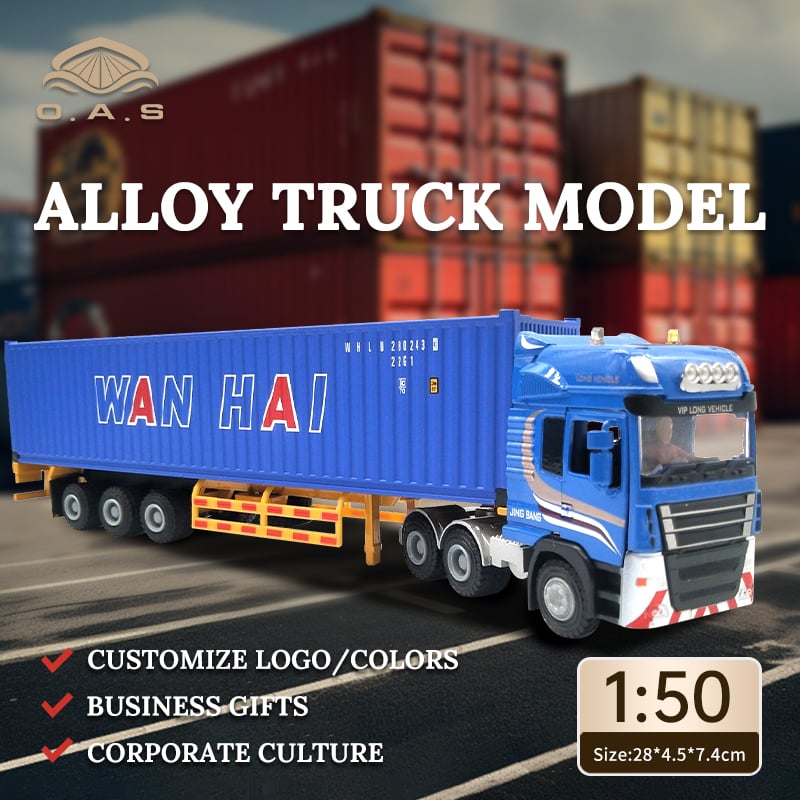
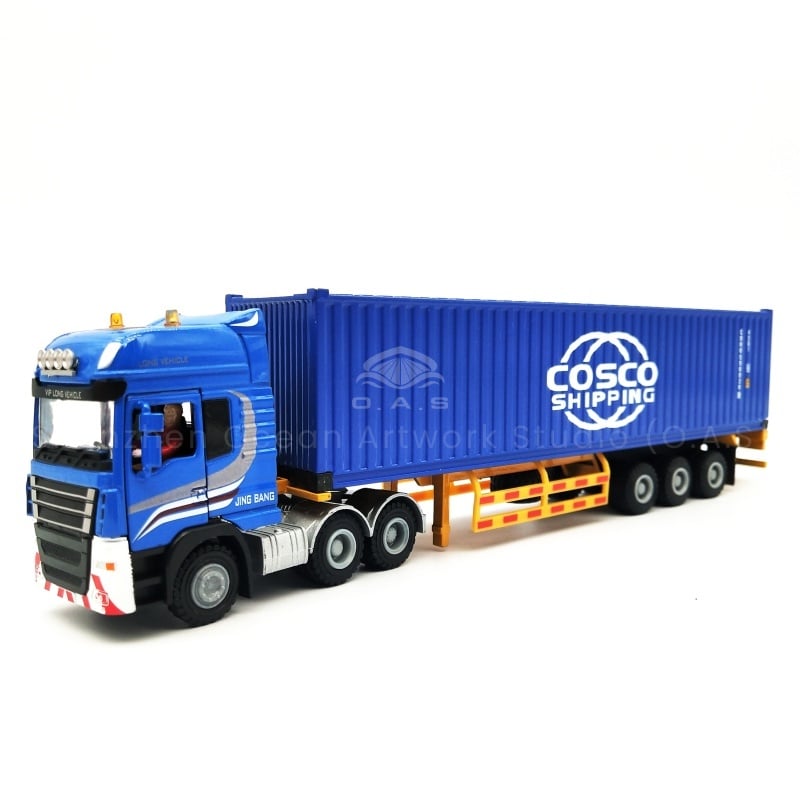
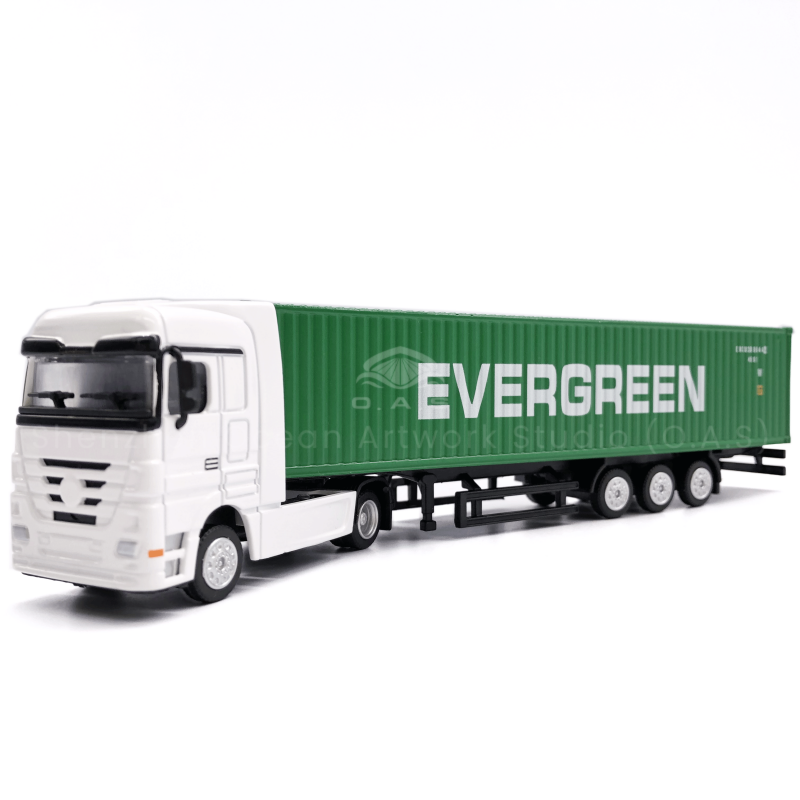
1:50 Alloy Truck Model with Custom Logo — From Your First Email to Delivery
Most product pages describe what a thing is. This one describes what happens after you send the email, because that is the part procurement teams actually have to plan around. You have an in-hands date, someone above you wants a cost, and nobody wants to explain in March why the 1:50 alloy truck model is still sitting in Shenzhen.
So here is the honest sequence — what we control, what we do not, and where a custom alloy truck model project normally goes sideways.
Step 1 — What We Actually Need From You
Four things, and everything we quote for a custom alloy truck model depends on them:
- Quantity — total units, and whether you want one livery or a set of cab colours
- Artwork — vector only: AI, EPS, PDF or a clean SVG. A JPEG lifted off your website is the commonest cause of a stalled custom logo truck model order we see
- Colour reference — a Pantone number, or a physical sample we can hold
- In-hands date — not the order date. The date it has to be on someone's desk
Miss the fourth one and we will still quote, but we will guess, and guesses are where things go wrong. A truck model order placed against a vague deadline is the most common reason a consignment ends up on air freight at three times the sea rate, so tell us the date even if it feels early.
Step 2 — Do You Need New Tooling, or Can We Reuse It?
This is the first real decision, and on a custom alloy truck model it usually decides the price.
If you are a shipping line or a forwarder we have worked with before, we may already hold your tooling. Client tools are stored rather than scrapped, so a repeat custom logo truck model order can skip the expensive part entirely. If this is your first order, or you are changing the cab shape rather than merely the paint, expect a tool set to be cut — cab, chassis, container, wheels and fittings are separate dies. That is why we settle tooling before we talk unit price — and why the tooling line, not the unit price, usually decides who wins a custom alloy truck model tender.
We will tell you plainly which side of that line you are on. There is no advantage to us in pretending a new tool is free, and on a repeat order this is usually the cheapest conversation in the whole project.
Step 3 — Colour Proofs and Test Panels
Days three to seven on a normal schedule.
We spray the nominated colours onto spare castings, photograph them under neutral light, and send you those images alongside a digital proof of the logo placement. Two reasons we proof on real metal rather than on screen: alloy takes paint differently from plastic, and a monitor will happily display a corporate red that nobody can actually spray.
This is your cheapest chance to change your mind about a colour. Take it. Once the 1:50 die-cast truck model sample is approved and the line is running, a colour change stops being a tweak and becomes a production stop. Nobody enjoys hearing that, but experienced buyers already know it is true. Every colour question we have ever had on a die-cast truck model has been cheaper to settle here than three weeks later.
Step 4 — The Decorated Sample
About a week from artwork confirmation on a single-colour order.
What arrives is a physically completed custom logo truck model: painted, printed, assembled, boxed. Not a rendering, not a photograph of a similar job. Hold it, roll it, put the logo on the cab door next to your brand book, and let whoever owns brand sign-off look at it. Deciding these things from a PDF is where most disputes begin.
Some clients ask us to send two units so that a marketing team and a procurement team can each keep one. We are fine with that. A second sample is a normal cost of doing business; a repaint after mass production is a problem for both of us. The same arithmetic applies to a logo sitting two millimetres off centre on a custom alloy truck model — trivial now, expensive later.
Step 5 — Approval, and the Point Where the Die Is Cast
Sign off and the change window closes. From then on, the artwork file and the approved sample become the reference standard, and everything downstream is measured against them — including the finished colourful head truck model that rolls off three weeks later.
Two things worth agreeing at this stage:
AQL level. We run AQL 2.5 sampling plus a 100% visual check on decorated parts, at the same standard whether you order 200 units or 2,000. It is not a number we negotiate down on a custom logo truck model. If your customer requires something stricter, say so now, while it can still be written into the truck model line schedule rather than bolted on afterwards.
Packaging spec. Gift box, foam insert, collection card, acrylic cover, master carton. Every addition carries its own lead time, and packaging causes more missed dates than casting ever does — which tends to surprise anyone ordering a branded truck model for the first time.
Where These Projects Usually Slip
Three problems account for almost every late custom truck model order we have seen — ours and other people's.
Approval sitting in an inbox. The commonest cause by a wide margin. Chase sign-off as hard as you chase your supplier.
A colour agreed verbally. "The usual blue" means nothing to a spray booth. Put it in writing, with a reference.
Packaging confirmed after production. The model is finished, the boxes are not, and now everything waits.
Notice that none of these are casting problems. A die-cast truck model is rarely the reason a consignment is late; the paperwork around it usually is.
Lead Time at a Glance
For anyone who has to drop a custom truck model order into a project schedule:
Stage |
Typical duration |
Quote and tooling decision |
1–2 days |
Colour proofs and test panels |
3–7 days |
Decorated sample |
~7 days from artwork confirmation |
Approval |
Your side — usually the slowest step |
Mass production |
25–35 days after approval |
Sea freight to EU / US East |
25–35 days |
Build a custom alloy truck model order backwards from the in-hands date and add two weeks of buffer if that date cannot move. The buffer costs nothing; the air freight bill does.
About O.A.S
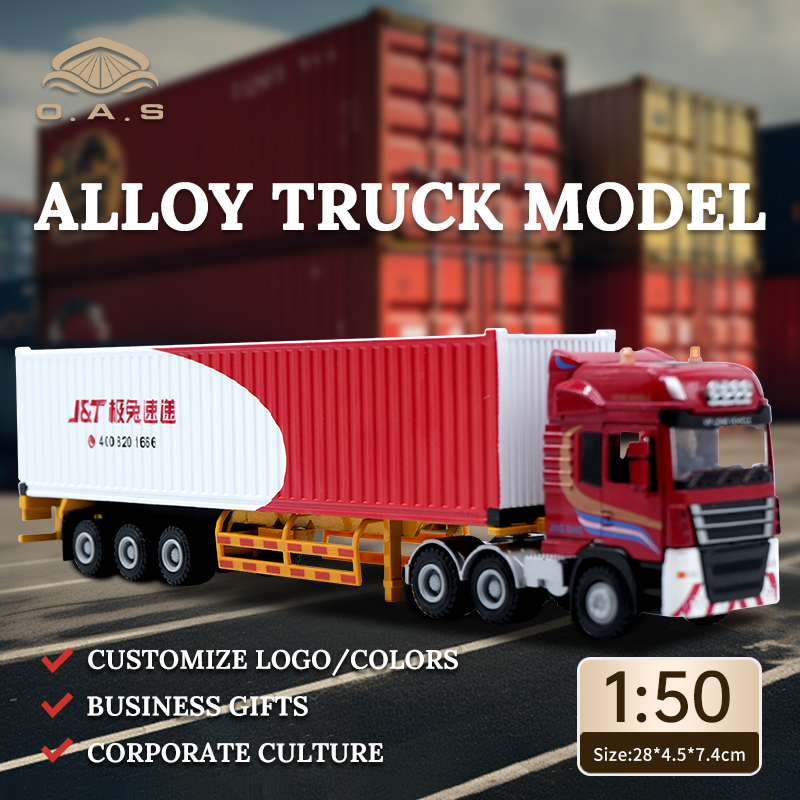
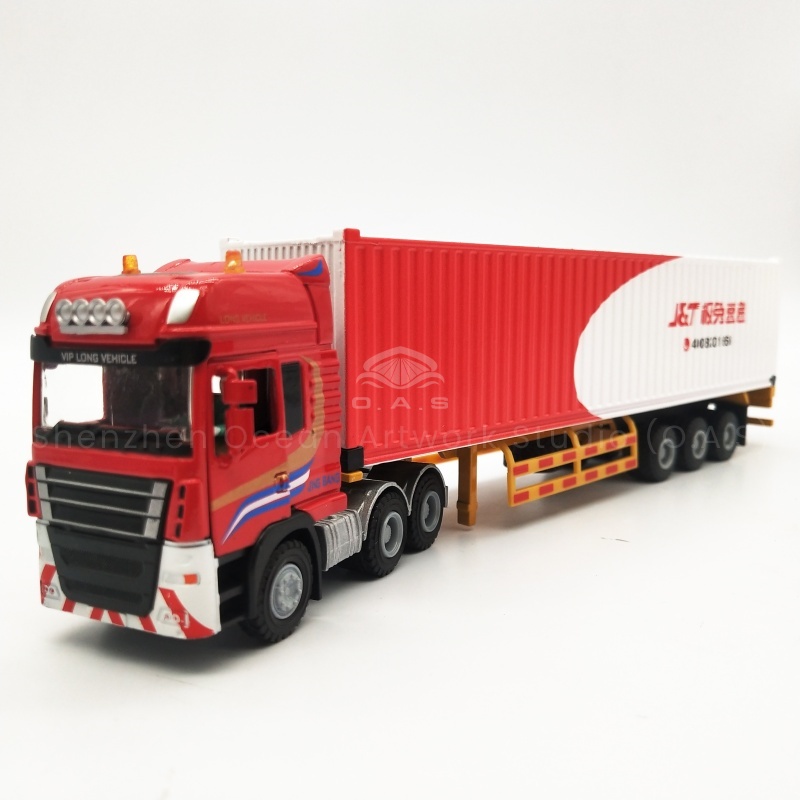
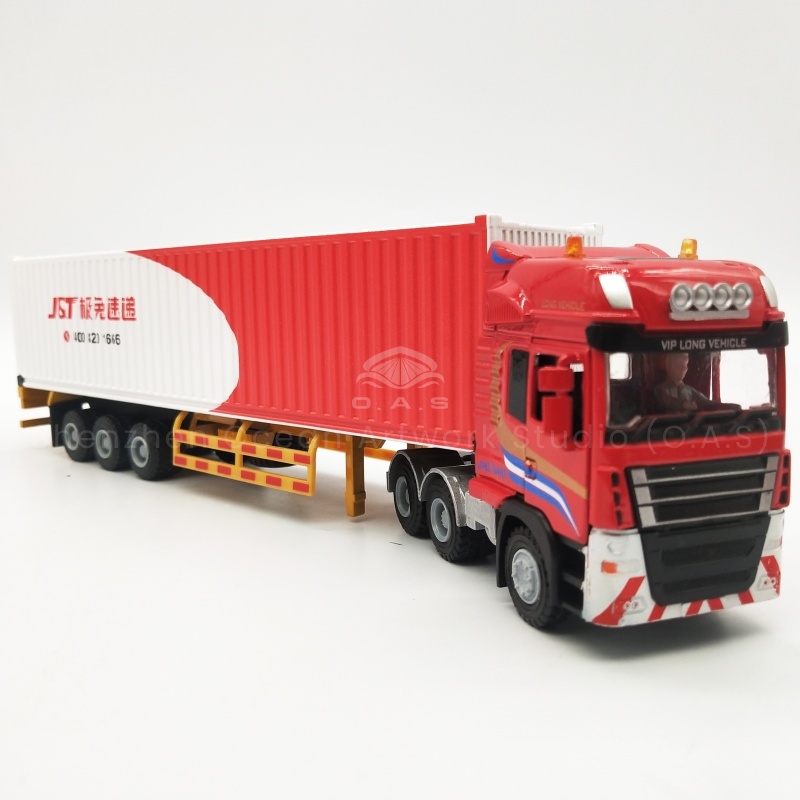
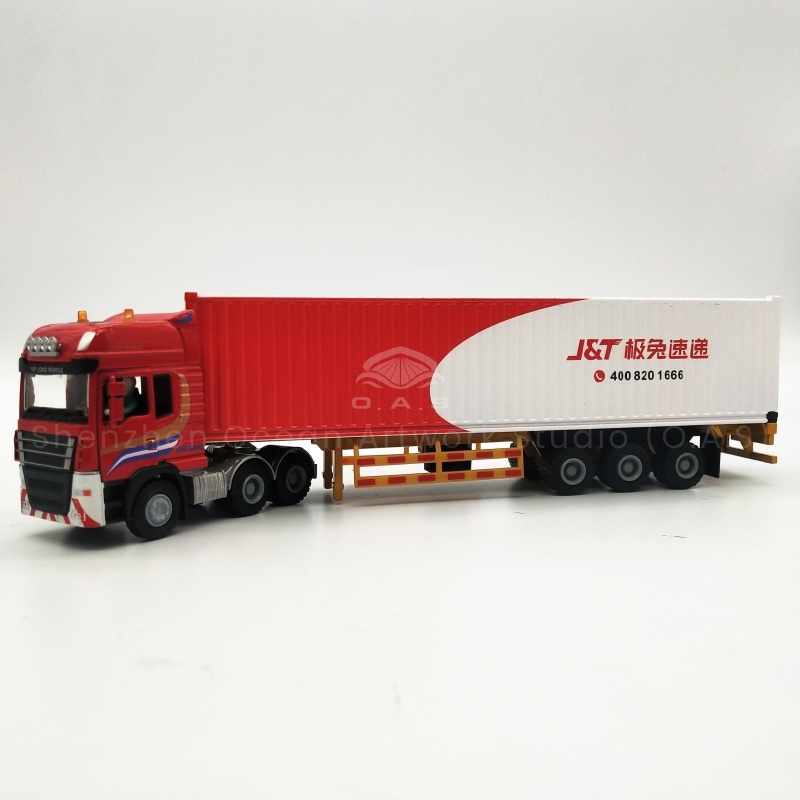
O.A.S — Shenzhen Ocean Artwork Studio (O.A.S) Technology Co., Ltd. — has been building ship and transport models from the same workshop since 2008, and the process above is simply how we have always worked. Shipping lines including MAERSK, CMA, MSC and COSCO have run branded custom truck model programmes with us, and every one of them followed this same sequence from artwork to pallet. Livery work like the JST version shown here is routine rather than exceptional, and no truck model leaves this workshop without going through every step above.
If you have a date in mind, send it with the artwork and we will tell you immediately whether it is realistic. Email Amber at [email protected] or call +86 18038048785.
FACTORY
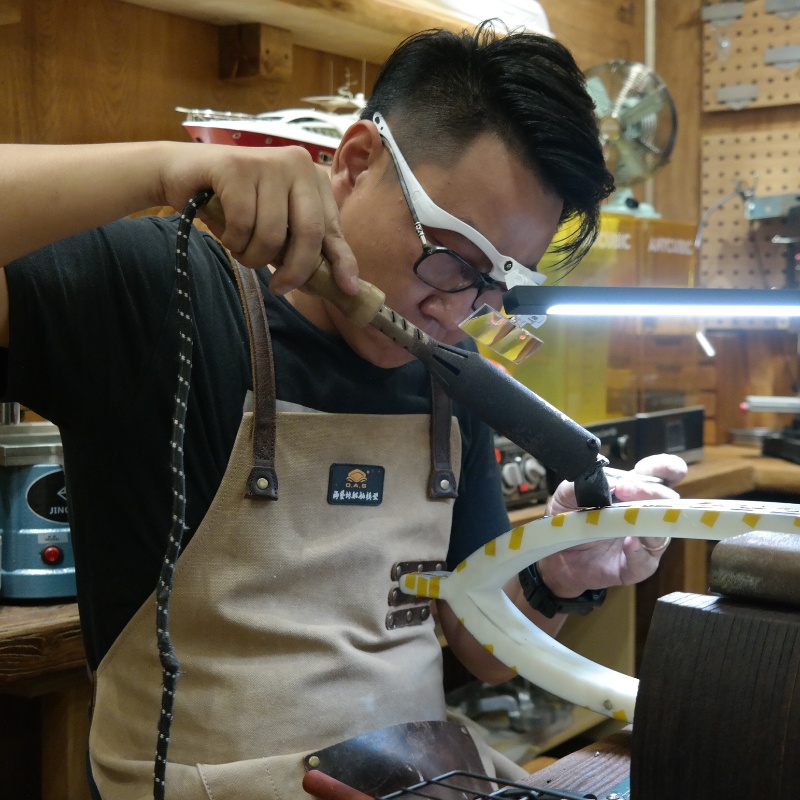
Model making
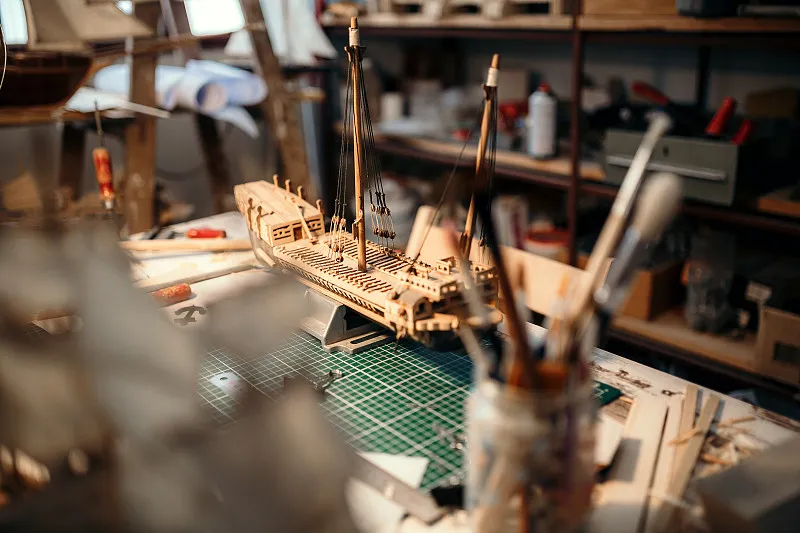
We have a professional model making team.
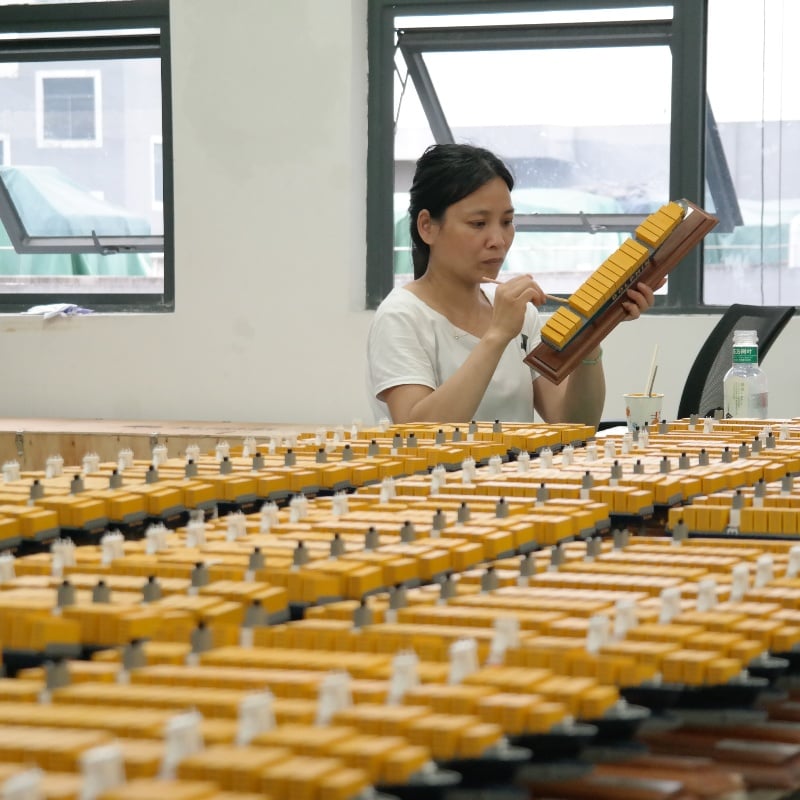
Paint in
Any color can be customized.
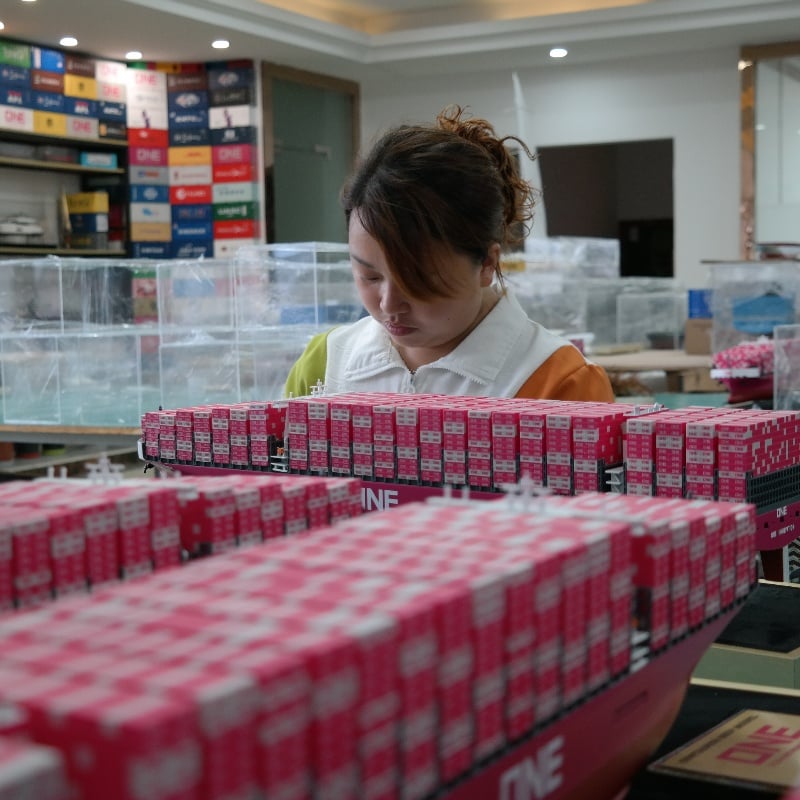
Check
We will check the quality of the model.
WHY CHOOSE US
1. Customization Expertise
We pride ourselves on our ability to fulfill even the most intricate customization requests. Whether you provide us with detailed sketches or simply a concept, our team can create a ship model that perfectly captures your vision.
2. Professional Service
With a dedicated team of experts in ship model design and production, we guarantee exceptional quality and reliability in every product we deliver. Our commitment to customer satisfaction ensures you receive not just a model, but an exceptional experience.