EN
EN

- PRODUCT DETAILS
- FACTORY
- WHY CHOOSE US
- RELATED PRODUCTS
PRODUCT DETAILS
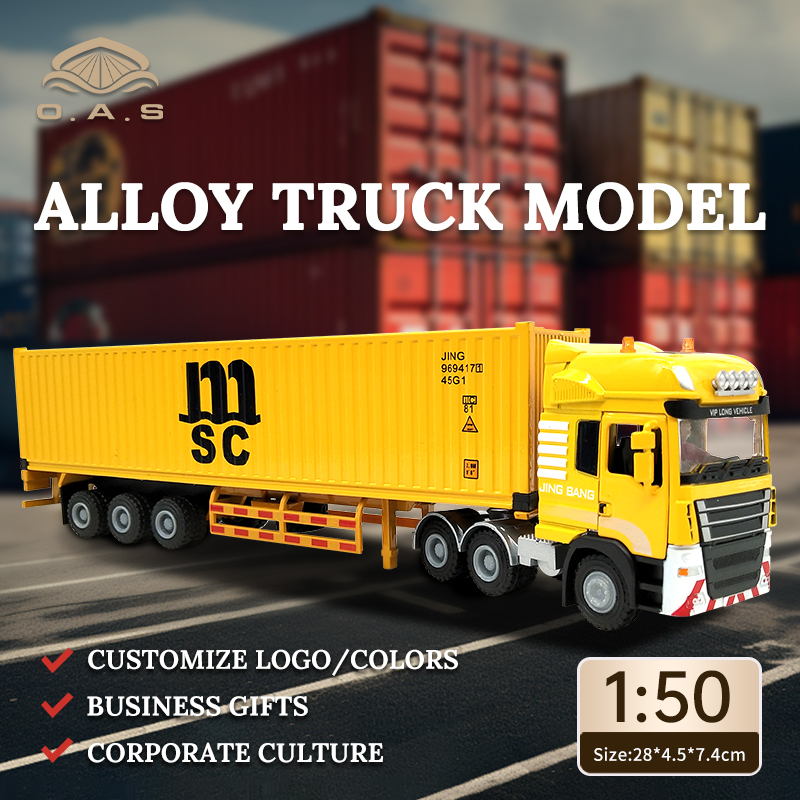
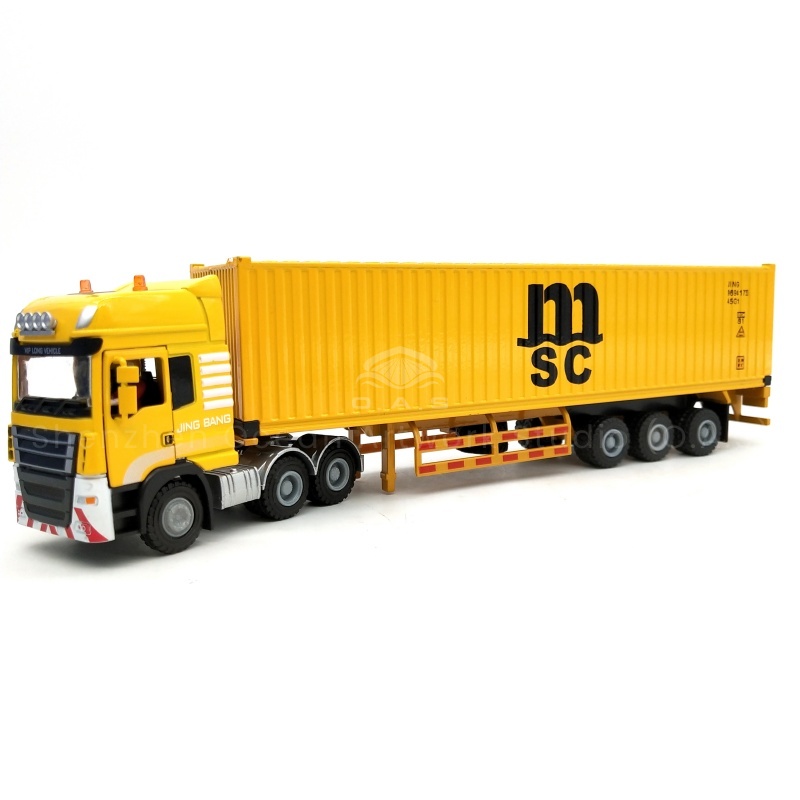
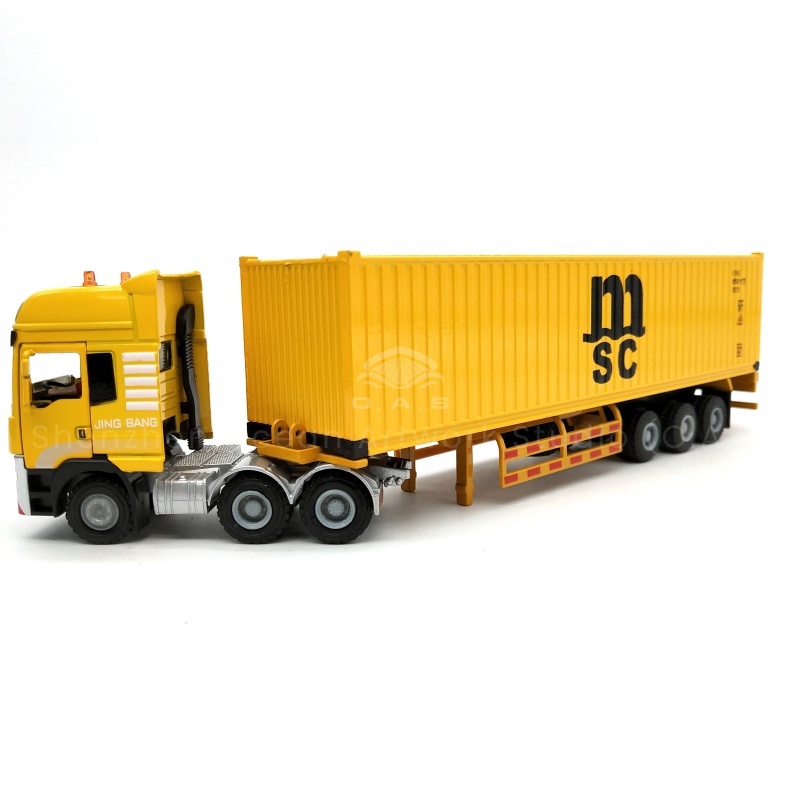
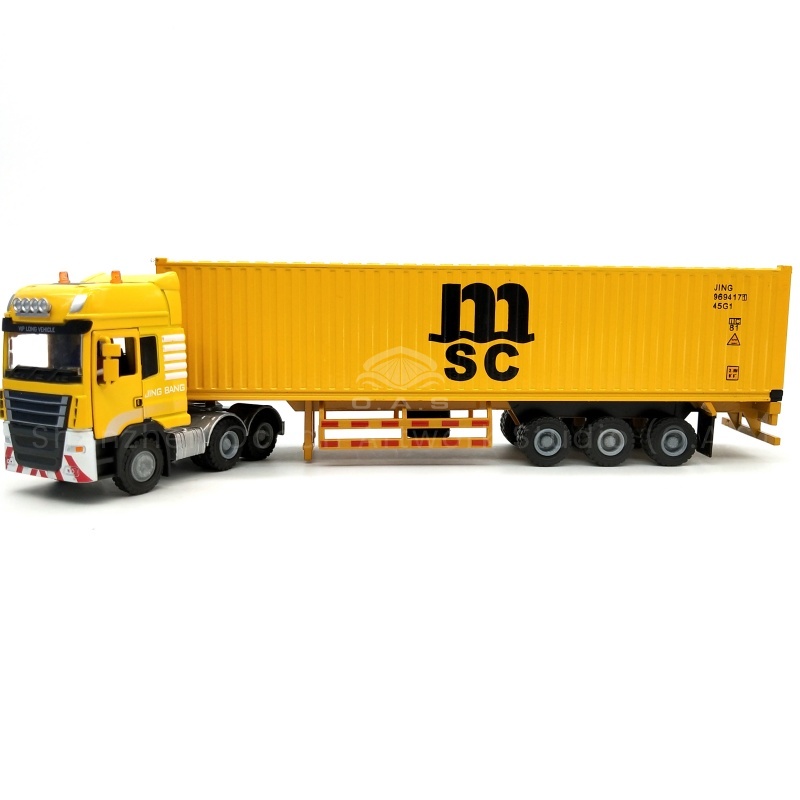
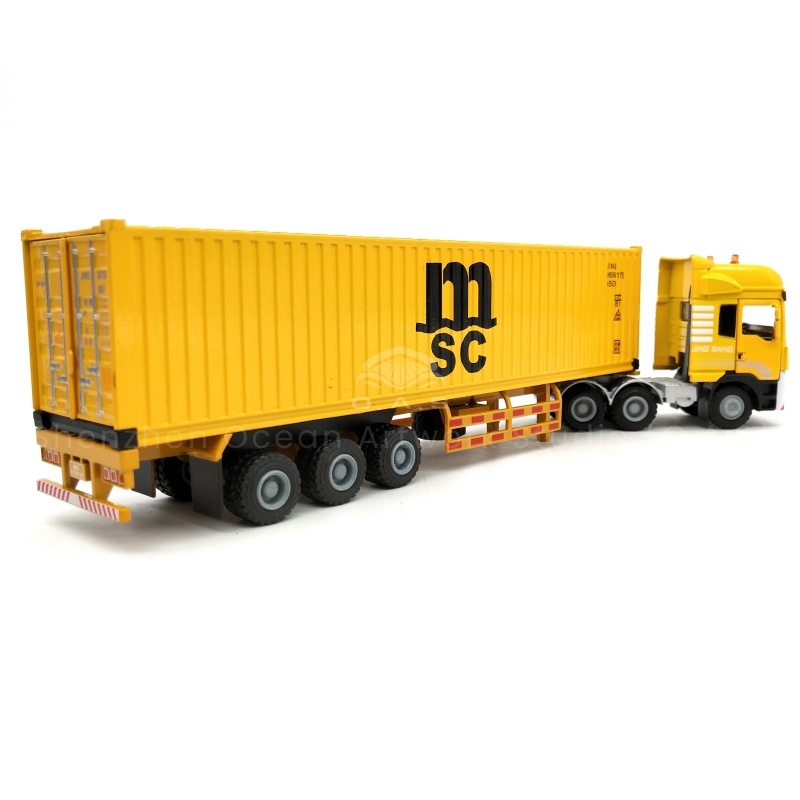
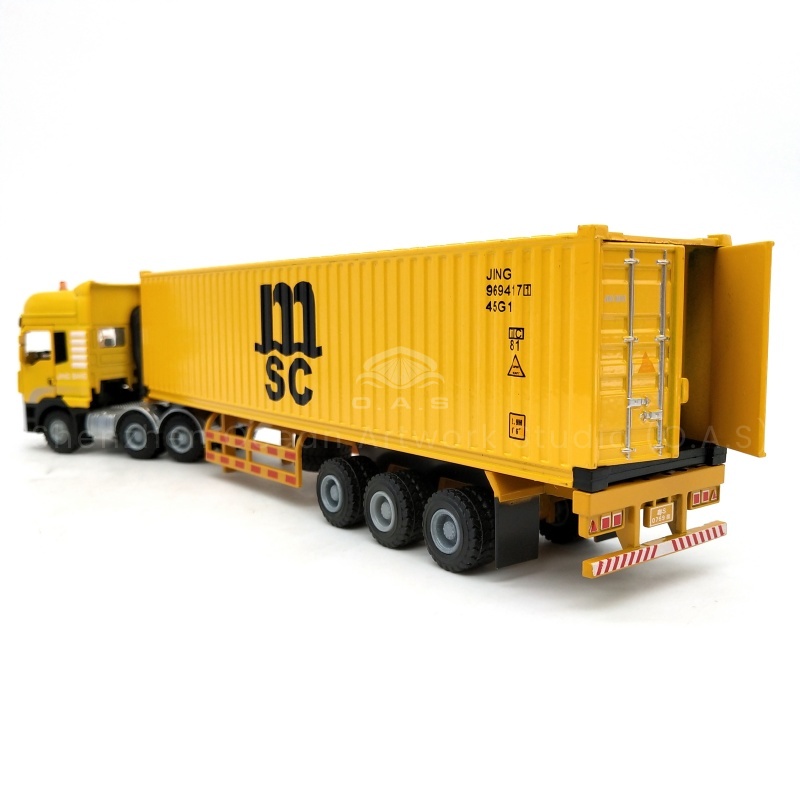
1:50 Custom Container Truck Model — Where Livery Accuracy Is Won and Lost
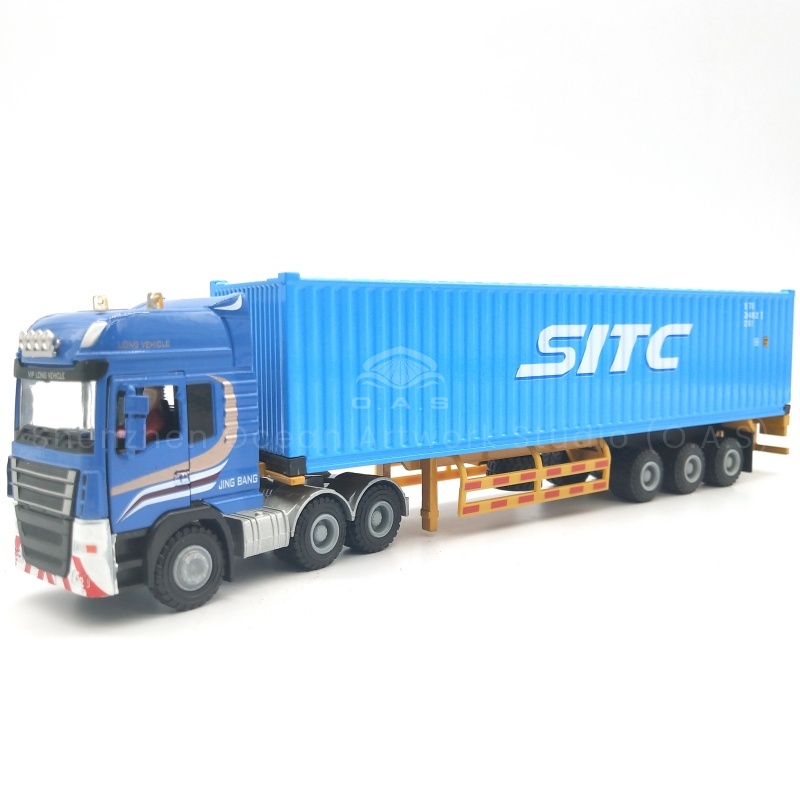
A container truck is a billboard that moves. The people who order a 1:50 container truck model are almost always the people whose name is painted on the side, which raises the stakes in a way a ship model never quite does. A custom container truck model is not judged as a handsome object on a shelf. It is judged against the real vehicle, and usually by someone who passes that vehicle every working day.
So when a sample comes back with comments, the comments are rarely about the truck. They are about the box behind it.
The Container Is Where the Errors Hide
The tractor gets all the attention when a container truck model is developed. The container is where it gives itself away.
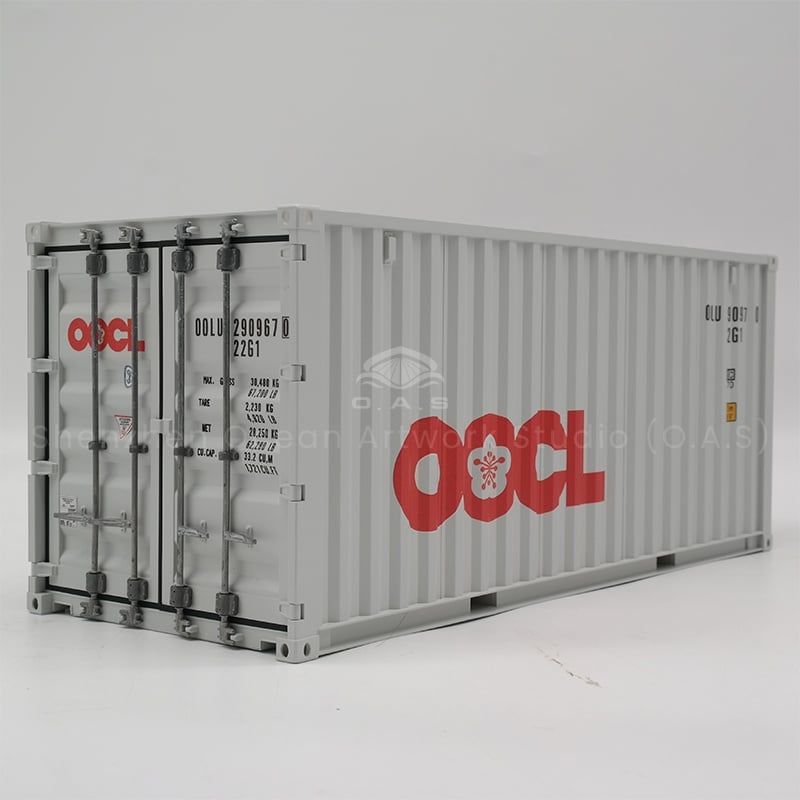
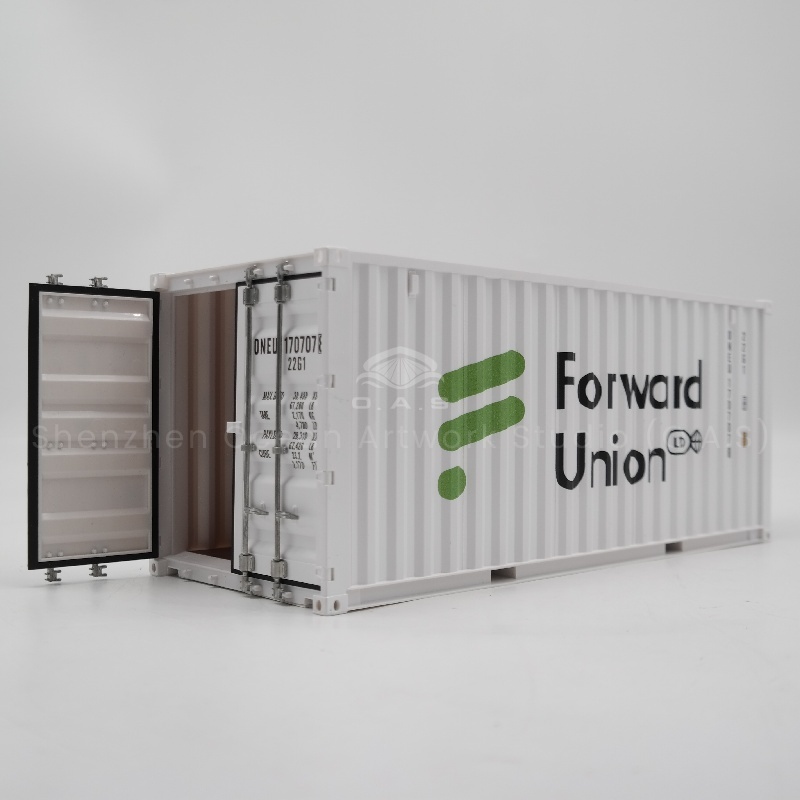
Anyone who works around boxes reads container markings the way a mechanic reads a dashboard. On a real container they are not decoration — they are a record, and they follow conventions that leave very little room for invention. On a container truck model they are the first thing that separates a replica from a toy.
Marking |
Where it appears |
What usually goes wrong |
Owner code + serial + check digit |
Front, both sides, rear doors, roof |
Placeholder numbers that fail the check-digit test |
Size and type code (for example 42G1) |
Rear door, upper right |
A code that does not match the container being modelled |
Max gross, tare, net, cube |
Rear doors, in large figures |
Figures borrowed from the wrong container class |
CSC safety approval plate |
Left rear door |
Asked for as readable text — physically impossible, see below |
Height warning band (high-cube units) |
Both sides, upper corners |
Left off entirely on cheaper alloy container truck models |
Operator logo and strapline |
Both sides, rear doors |
Logo stretched or re-kerned to fill the panel |
Get these wrong and your container truck model still looks perfectly good to a marketing director while looking obviously wrong to a freight forwarder. We have had a client reject a decorated sample over a single digit in a serial number. They were right to.
The Container Number Is Not Decoration
Every container in service carries an eleven-character identifier: a four-letter prefix — three letters for the owner, one for the equipment type — then six digits, then a check digit.
The check digit is not decorative either. Each character is converted to a number (for letters, through a table that deliberately skips the multiples of eleven), multiplied by a positional weight, summed, and reduced modulo eleven. Anyone holding a phone can recalculate the whole thing in under a minute.
That has a practical consequence when you brief a custom container truck model order. If you send a placeholder like MSCU1234563, someone inside your own organisation will eventually work out that the last character does not belong to the first ten, and the container truck model will read as a prop rather than a replica. Send the real number. If the number you send fails the calculation, we will flag it before a single container truck model reaches a print bed — an argument about one digit is considerably cheaper than reprinting five hundred containers.
There is a spatial limit too, and it surprises people. On the real box the full identifier spans a little over a metre. Divide by fifty and you are printing it across roughly 24 mm of a container truck model, about the width of a postage stamp, on a curved panel, in a colour that has to sit evenly on a corrugated field.
Colour: From Brand Guide to Painted Zinc Alloy
Most operators protect their livery in a brand manual, and the manual will typically define a colour reference and a gloss level. Both matter, and the second one gets ignored.
A colour reference is not a paint specification. The same reference sprayed onto zinc alloy reads differently from the printed chip in the manual, and differently again under office lighting, daylight, and the mixed lighting of an exhibition hall. Gloss level shifts perceived hue as much as pigment does — a dark blue at 20 units of gloss and the same dark blue at 80 units are, to the eye, two different colours. So we do not paint a container truck model to a reference alone. We paint to the reference plus a physical anchor: a photograph of the actual unit shot outdoors in flat light, or better, something off the real thing.
What we do not do is read a colour off a screen. An uncalibrated monitor will display an operator's livery with total confidence and no relationship to what can actually be mixed.
One question worth settling early, because it changes the unit price and it changes the brief: do you want the container truck model as it left the paint shop, or as it looks today? A brand-new livery is what most corporate buyers want. A lightly weathered finish — dust trails behind the door hardware, a dulled roof, faded decals — is hand work, priced per unit, and we will not add it unless you ask, because a badly weathered container truck model simply looks like a badly painted one.
Printing Markings Two Millimetres Tall
This is where a lot of well-intentioned briefs meet physics.
Pad printing handles bold marks on panels and gentle curves, but ink cannot wrap a compound curve without distorting. Across corrugation ridges it also breaks up, which is why we place logos on flat panels of a container truck model unless you specifically want the mark riding over ribs.
Water-slide decals carry finer, multi-colour artwork, and they must be clear-coated afterwards or they will lift at the edges within a season.
Laser engraving cuts a relief into the surface. It is monochrome by nature — you get the material's own colour plus a shadow, not a printed colour — and it is best reserved for data plates and baseplates.
Etched plates give the sharpest small text available and are a separate fitted part, usually on the stand or the base of a container truck model.
Frequently Asked
Can you match our exact livery? Yes, given the brand manual reference plus a physical anchor. Expect the result on a custom container truck model to be judged as very close rather than identical — coated zinc alloy and painted steel are different substrates, and no responsible factory will promise otherwise up front.
Do you need the real container number? Strongly preferred. We can generate a valid one for a concept container truck model that is only being used internally, but for anything handed to people in your own industry, use a genuine number.
Can the container doors open? They can. It adds a hinge assembly and an interior, so on a container truck model it changes the tooling cost rather than the unit price alone.
What is the minimum order for a custom livery? It depends entirely on whether your container truck model needs new tooling or only new decoration, which are very different conversations. Tell us the livery and the quantity and we will tell you which one you are in.
About O.A.S
Shenzhen Ocean Artwork Studio (O.A.S) Technology Co., Ltd. has been building ship and transport models since 2008, and we have supplied 1:50 container truck models and vessel models alongside projects for MAERSK, CMA, MSC, COSCO, EVERGREEN, OOCL, WANHAI and ONE, among others. Operator livery work is routine here rather than a speciality invented for one client.
Send us your brand reference, your container number and the quantity, and we will come back with the right questions and a realistic date for your custom container truck model. Email Amber at [email protected] or call +86 18038048785.
FACTORY
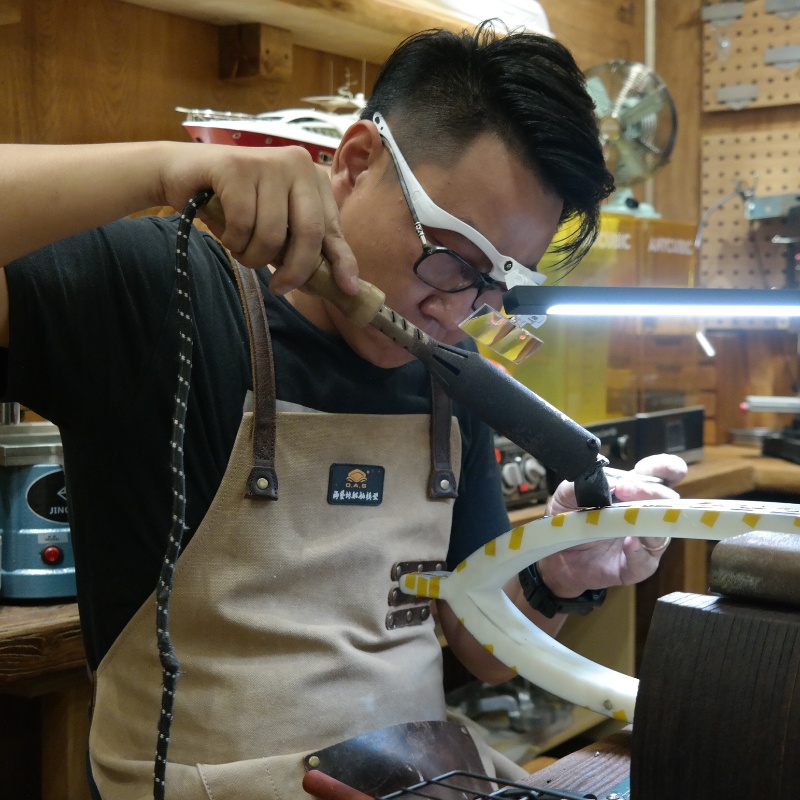
Model making
We have a professional model making team.
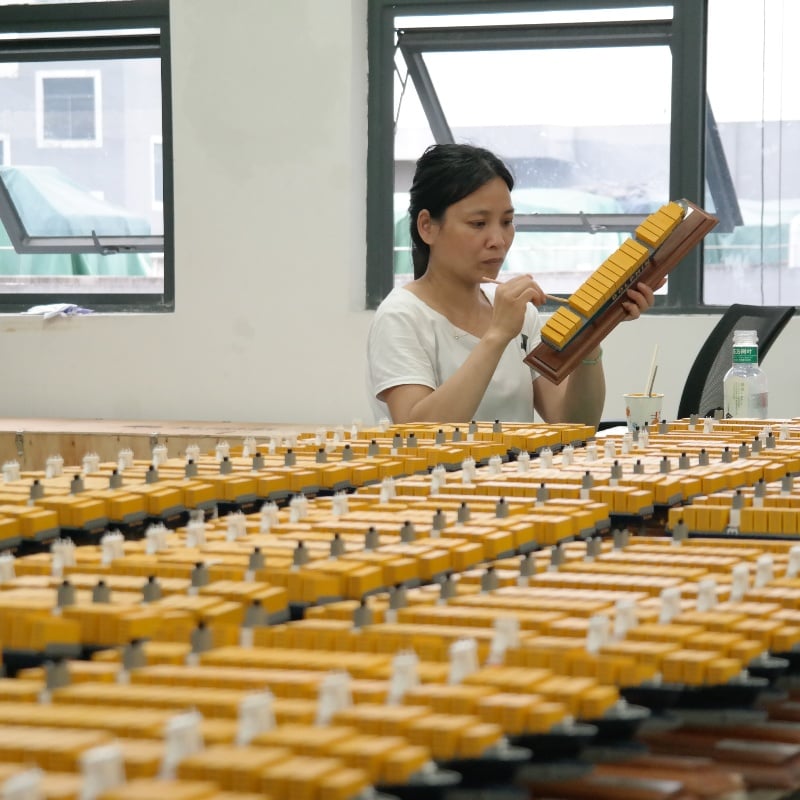
Paint in
Any color can be customized.
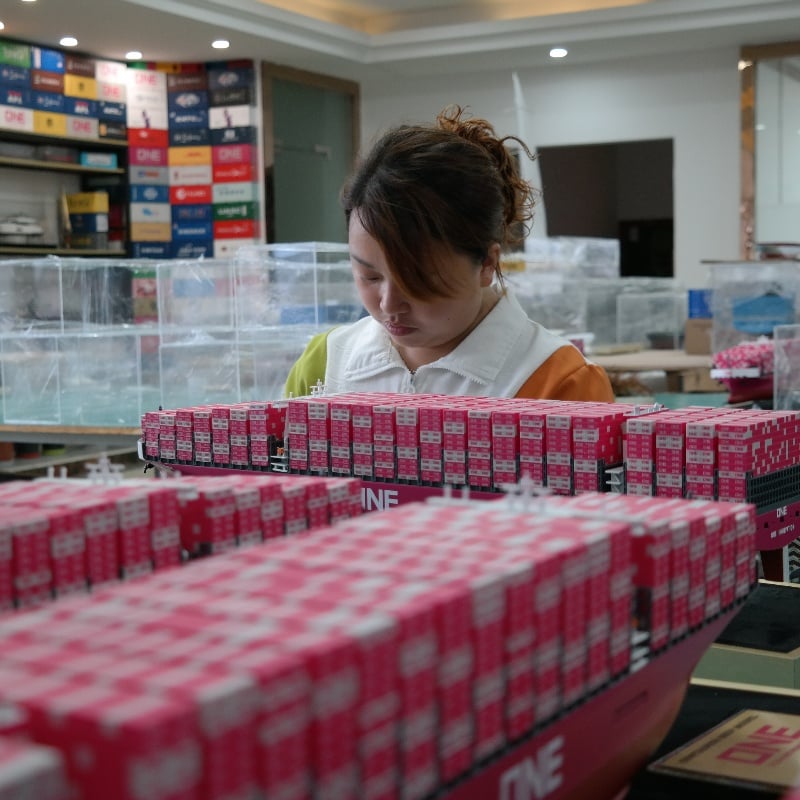
Check
We will check the quality of the model.
WHY CHOOSE US
1. Customization Expertise
We pride ourselves on our ability to fulfill even the most intricate customization requests. Whether you provide us with detailed sketches or simply a concept, our team can create a ship model that perfectly captures your vision.
2. Professional Service
With a dedicated team of experts in ship model design and production, we guarantee exceptional quality and reliability in every product we deliver. Our commitment to customer satisfaction ensures you receive not just a model, but an exceptional experience.